AP-NORC: Prices and Economy Top Voter Concerns as Midterm Stakes Rise
With 35% approval for President Trump and 7 in 10 seeing the wrong direction, economic anxiety drives turnout in key battlegrounds like North Carolina and Florida.
By Lucas Navarro ·
On Tuesday, November 3, 2026, voters across the United States are casting ballots in the midterm elections that will determine control of Congress for the final two years of President Donald Trump's second term. The Associated Press describes the day as a referendum on the president's performance, highlighting a electorate that is struggling with high prices and expressing anger over an unpopular war with Iran. As polls open, the focus is firmly placed on the economic conditions facing American families, which have become the central metric for many undecided and independent voters.
New data from the AP-NORC poll reveals the depth of this economic anxiety. Only 35 percent of U.S. adults currently approve of President Trump's job performance, while just 25 percent are satisfied with his handling of the economy. Furthermore, about seven in ten respondents say the country is heading in the wrong direction. Most of those who hold this view blame the president for rising prices. These numbers suggest that the cost of living is not merely a campaign talking point but a primary driver of voter sentiment in this cycle.
The economic strain is palpable in battleground states where the Senate and House races are closely contested. In North Carolina, an open Senate race is being decided against the backdrop of shifting political winds. Democratic former Governor Roy Cooper faces former Republican National Committee chair Michael Whatley. The state voted for Trump in 2024, but the AP notes that economic strain and tariffs have made similar states competitive. In Raleigh, North Carolina, 57-year-old librarian James Moore articulated the frustration felt by many in the region. He stated, "I'm paying more taxes. I'm paying more for my healthcare. I'm paying more for everything." His comments reflect a broader narrative of financial pressure that is influencing decisions in this pivotal district.
Contrasting this view is the perspective of supporters who remain loyal to the president's economic agenda. In Palm Beach Gardens, Florida, voter Mark Barker expressed confidence in the administration's direction. He said, "I've just been following Trump the whole time. I really think he's doing an awesome job." This divide between those feeling the pinch of inflation and those who view the current trajectory as successful highlights the polarized nature of the electorate. Both sides believe their economic interpretation is correct, and both are mobilizing their base to ensure their preferred outcome is realized in the final tally.
The Senate race in Maine provides another example of how economic factors are reshaping political landscapes. Senator Susan Collins, a Republican, faces Democratic former State Senate President Troy Jackson. The AP reports that economic strain and tariffs have made this state competitive, a significant shift for a traditionally Republican-leaning area. Meanwhile, in Kansas, a state that has become central to the fight for Senate control, the race is rated as a toss-up or leaning Republican. The state's economic health is a key factor in how voters there weigh their choices, particularly as the AP notes that Trump held a rally in Salina, Kansas, on Sunday, urging voters to "pretend I'm on the ballot."
Republicans are bracing for the possibility of losing the House, where Democrats need a net gain of only three seats to secure a majority. The AP notes that one or two seats could tip either chamber, making every district critical. In response, Republican committees have outspent Democratic committees, aided by Trump-affiliated groups and Elon Musk. However, at the candidate level, Democrats have outraised their opponents. The strategic deployment of funds is evident in the ad spending data, with 88.1 percent of Republican general election TV ad spending going to states and districts Trump won in 2024. This suggests a strategy focused on defending strongholds while attempting to hold the Senate.
Democrats, described as "cautiously optimistic," are focusing on their ability to deliver change. DCCC Chair Rep. Suzan DelBene stated, "The American people are angry. They want change." This message resonates with voters like James Moore in Raleigh, who feels the weight of increased costs. The Democratic strategy relies on turning economic dissatisfaction into votes, particularly in the 46 battleground districts identified by Ballotpedia. These districts, where the outcome is uncertain, will largely determine whether Democrats can achieve their goal of controlling at least one chamber of Congress.
The stakes extend beyond simple control of Congress. If Democrats win even one chamber, investigations and possible impeachment proceedings become likely. House Democratic Leader Hakeem Jeffries, who would be the first Black speaker if Democrats take the House, has outlined a 100-day agenda focused on the cost of living and oversight. A strong Democratic performance would also boost potential 2028 candidates like Gavin Newsom, JB Pritzker, and Pete Buttigieg, while potentially complicating the path for Vice President JD Vance. Republicans, on the other hand, are trying to break the historical pattern of a president's party losing seats in midterm elections, relying on new congressional maps in states like Florida and North Carolina to their advantage.
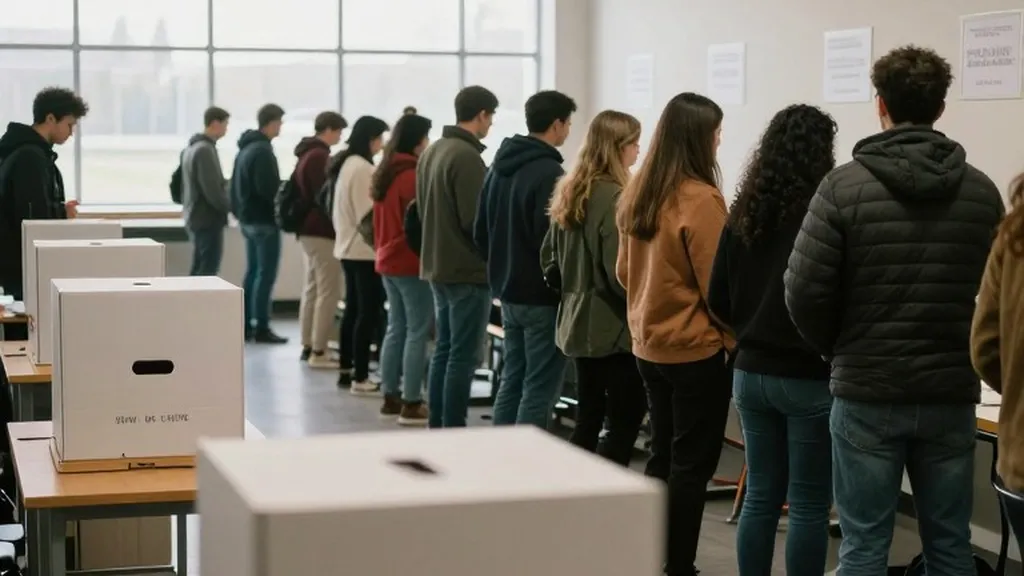
Voter turnout is the final variable that could tip the balance. RNC Chairman Joe Gruters emphasized, "Everything depends on turnout. If we turn out our voters, we win, and that's what we've been planning for." With more than 57 million people having already voted as of Monday, surpassing early vote totals from four years ago, the sheer volume of participation is a key metric. The U.S. Postal Service has added hours and staff to ensure mail ballots are counted on time, reflecting the logistical challenges of a high-turnout election. As polls close across the nation, from 6 a.m. in some states to 9 p.m. in New York, the focus remains on whether economic concerns will translate into a decisive shift in power.