New Maps in Seven States Could Upend Midterm Expectations
Redistricting in California, Florida, and five other states created districts that may not vote as their new boundaries suggest.
By Andrew Kovalenko ·
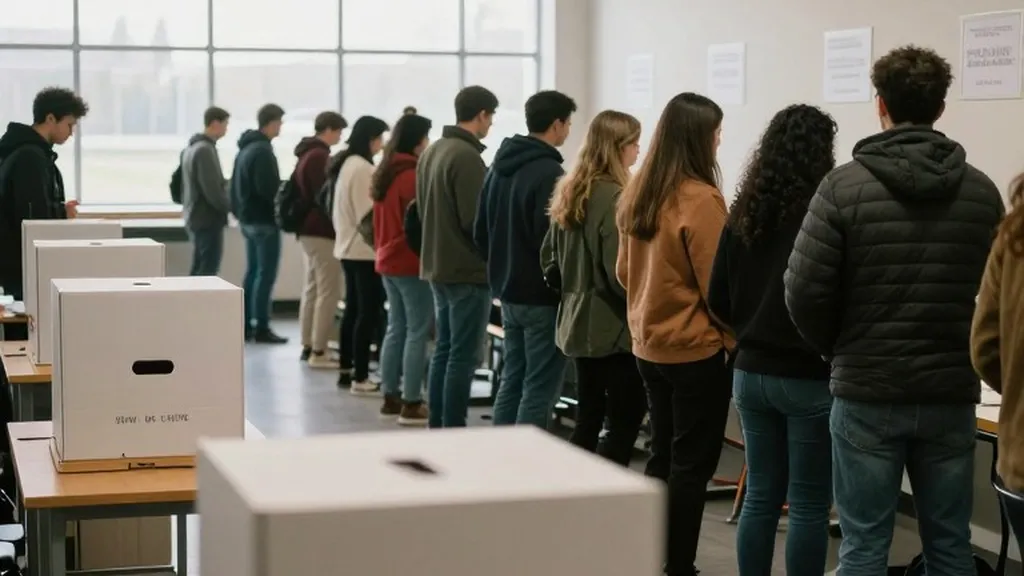
Voters across the country are casting ballots on Tuesday, November 3, 2026, to decide the composition of Congress for the final two years of President Donald Trump's second term. All 435 seats in the U.S. House and 35 of 100 seats in the Senate are up for election. The Associated Press describes the day as a referendum on the president's performance, with many citizens citing high prices and an unpopular war with Iran as primary drivers of their vote. More than 57 million people had already voted as of Monday, surpassing early vote totals from four years ago in several closely watched states.
A significant factor in this year's race is the use of new congressional maps in seven states: California, Florida, Missouri, North Carolina, Tennessee, Texas, and Ohio. These boundaries were drawn following mid-decade redistricting processes. While these maps were designed with specific political goals in mind, political analysts and campaign strategists warn that the new districts may not vote as the maps suggest. This uncertainty adds a layer of complexity to an election where the margins for victory are razor-thin.
In the House, Democrats currently hold 214 seats and need a net gain of three districts to claim a majority. Republicans hold 218 seats and can afford to lose no more than two. Ballotpedia counts 46 battleground districts, with 25 held by Democrats and 21 by Republicans. Notably, 21 of the districts currently held by Democrats voted for Trump in 2024, while nine districts held by Republicans voted for Kamala Harris. These shifting allegiances suggest that the new lines in states like Florida and Texas may not solidify the expected partisan outcomes.
The Senate race is equally precarious, with Democrats needing a net gain of four seats to take control. Republicans hold 53 seats and can only afford to lose two. Thirteen Senate races are considered battlegrounds, including contests in Georgia, Michigan, and North Carolina. In North Carolina, former Governor Roy Cooper is running against former Republican National Committee chair Michael Whatley. In Georgia, Senator Jon Ossoff faces Representative Mike Collins. These races are pivotal because the state-level outcomes will determine which party controls the legislative agenda for the next two years.
Republicans entered the election bracing for potential losses in the House while fighting to hold the Senate. One or two seats could tip the balance in either chamber. Joe Gruters, the RNC Chairman, stated that everything depends on turnout and that the party has been planning for this scenario. In contrast, Democrats expressed cautious optimism. Rep. Suzan DelBene, the DCCC Chair, said the American people are angry and want change. This sentiment is reflected in polling data, where about seven in 10 adults say the country is heading in the wrong direction.
Money plays a crucial role in shaping these outcomes, with the 2026 elections likely to be the most expensive in history. Republican committees outraised and outspent their Democratic counterparts at the committee level, aided by Trump-affiliated groups and Elon Musk. However, at the candidate level, Democrats outraised their opponents. An AP analysis of AdImpact data shows that 88.1% of Republican general election TV ad spending went to states and districts Trump won in 2024. This heavy spending in safe Republican areas contrasts with the strategic uncertainty in the newly drawn districts.
The new maps in states like Ohio and Missouri have drawn particular attention. In Ohio, the special Senate election features former Senator Sherrod Brown against Senator Jon Husted. The state's new congressional boundaries have been scrutinized for how they might shift voter behavior. Similarly, in Texas, Attorney General Ken Paxton is running in a competitive race, with the AP noting that the state's governor race is also tight. These examples illustrate how redistricting can create competitive environments that defy simple partisan predictions.
Voters on the ground are expressing a range of opinions about the current political climate. Mark Barker of Palm Beach Gardens, Florida, said he has been following Trump closely and believes he is doing an awesome job. James Moore, a librarian in Raleigh, North Carolina, highlighted his concerns about rising costs, stating that he is paying more for taxes, healthcare, and everything else. These individual perspectives reflect the broader national debate over the economy and the direction of the country.
The administration has also been active in election administration, with a federal judge temporarily barring a plan to prevent noncitizen voting. Another judge ordered the administration to stop demanding that California officials segregate ballots cast by people on lists of suspected noncitizens. These legal moves have raised concerns about potential interference and intimidation, particularly as the Justice Department threatens to prosecute local election officials. The U.S. Postal Service has added resources to ensure mail ballots are counted on time, a critical step in states like California and Florida.
As polls close, the focus shifts to the potential implications of the results. If Democrats win either chamber, investigations and possible impeachment proceedings become likely. House Democratic Leader Hakeem Jeffries would be the first Black speaker if his party takes the House, and he has outlined a 100-day agenda focused on the cost of living and oversight. A strong Democratic night could also boost potential 2028 candidates and complicate the path for Vice President JD Vance. The final tally will reveal whether the new maps in these seven states lived up to their design or if voter behavior proved more fluid than anticipated.
The election results will also have implications for Wall Street, with investors watching for signals on AI spending and debt ceiling negotiations. The outcome of the midterms will set the tone for the remainder of the Trump administration's term. As the night progresses, attention will turn to the battleground districts in the newly redistricted states to see if they vote as the lines were drawn or if the electorate asserts a different will.