57 million early votes set stage for tight midterm race
Both parties focus on turnout strategies as voters weigh economic concerns and presidential performance.
By Lucas Navarro ·
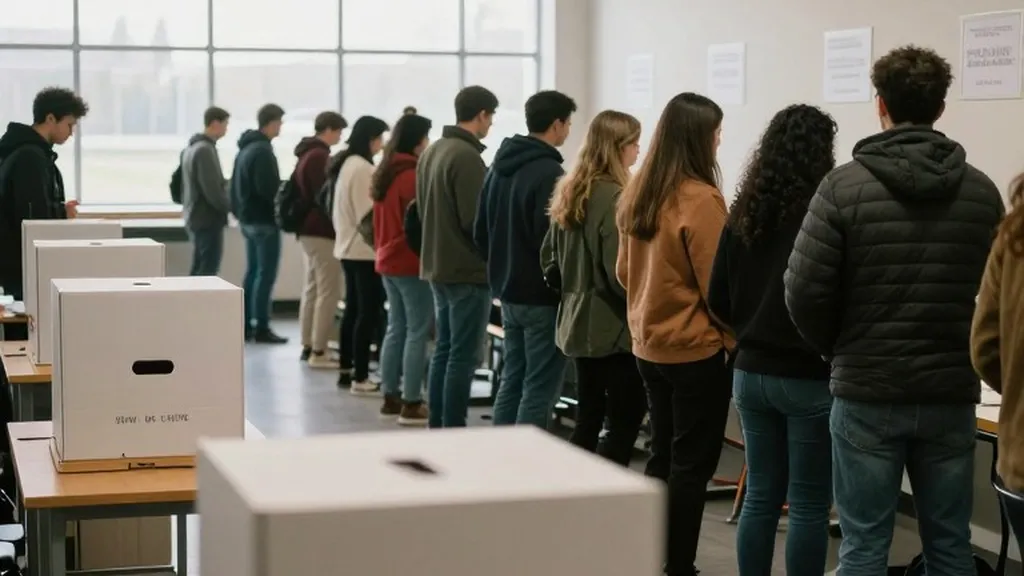
More than 57 million Americans had already cast their ballots by Monday, surpassing early vote totals from four years ago in many closely watched states. This surge in early voting is setting the stage for what both political parties view as a decisive contest for control of Congress. With polls open across the country, the focus has shifted from campaigning to the logistical ground game of getting voters to the polls on election day. The sheer volume of early ballots means that turnout patterns on Tuesday will be critical in determining the final outcome in dozens of competitive districts.
Voters are struggling with high prices and are angry over an unpopular war with Iran. This mood is reflected in recent polling, which shows that 35 percent of U.S. Adults approve of President Donald Trump's job performance. Only 25 percent approve of his handling of the economy, while about seven in ten say the country is heading in the wrong direction. Most voters who expressed dissatisfaction blamed the president for rising costs. This economic anxiety is driving much of the debate in the midterm elections, with candidates on both sides tailoring their messages to address these concerns.
Republican National Committee Chairman Joe Gruters emphasized the importance of turnout in a recent statement. He said, "Everything depends on turnout. If we turn out our voters, we win, and that's what we've been planning for." Gruters noted that his party was bracing to lose the House but was fighting to hold the Senate. The AP notes that one or two seats could tip either chamber, making the ground game essential for Republicans. Many Republican candidates have kept their distance from the president, who held dozens of rallies in the final days before the election, including a stop in Salina, Kansas, where he told supporters, "I really want you to pretend I'm on the ballot."
Democratic Congressional Campaign Committee Chair Rep. Suzan DelBene offered a different perspective on the voter mood. She said, "The American people are angry. They want change." DelBene noted that Democrats were cautiously optimistic about their chances in the race. The party is looking to gain at least three seats in the House to secure a majority. In the Senate, Democrats need a net gain of four seats to take control. The AP points out that 60 House incumbents did not run again, opening up numerous opportunities for challengers. Ballotpedia identifies 46 battleground districts in the House, with 25 currently held by Democrats and 21 by Republicans.
The ground game has been intense, with both parties investing heavily in voter outreach and transportation. The U.S. Postal Service added hours, staff, and special lines to ensure that mail ballots are counted on time. This logistical effort is crucial in states where mail-in voting is common. Reuters notes that a federal judge temporarily barred the Trump administration from carrying out a plan it says would prevent noncitizen voting. Critics argue that this plan risks disenfranchising eligible voters and infringes on states' authority over elections. A judge also ordered the administration to stop demanding that California election officials segregate ballots cast by people on its lists of suspected noncitizens.
Voters in Palm Beach Gardens, Florida, expressed mixed sentiments about the election. Mark Barker, a voter, said, "I've just been following Trump the whole time. I really think he's doing an awesome job." In contrast, James Moore, a 57-year-old librarian in Raleigh, North Carolina, highlighted the financial strain on families. He said, "I'm paying more taxes. I'm paying more for my healthcare. I'm paying more for everything." These individual stories reflect the broader national debate over the cost of living and the direction of the country. The AP describes the election as a referendum on Trump's second term, with voters weighing their approval of his leadership against their personal economic experiences.
The financial aspect of the election has also been significant, with the 2026 elections likely to be the most expensive in history. Republican committees outraised and outspent Democratic committees, helped by Trump-affiliated groups and Elon Musk. However, at the candidate level, Democrats outraised their opponents. According to an AP analysis of AdImpact data, 88.1 percent of Republican general election TV ad spending went to states and districts Trump won in 2024. This includes more than $850 million in states where he won by 10 points or more. Democrats, on the other hand, focused their spending on competitive districts where they believe they can make gains. The distribution of funds highlights the different strategies each party is employing to win control of Congress.
In the Senate, 35 seats are up for election, including 33 regular elections and two special elections. Republicans hold 53 seats, while Democrats hold 45, plus two independents who caucus with Democrats. Ballotpedia lists 13 Senate races as battlegrounds, with key matchups in states like Georgia, North Carolina, and Michigan. In Georgia, Sen. Jon Ossoff is facing Republican Rep. Mike Collins. In North Carolina, former Gov. Roy Cooper is challenging former RNC chair Michael Whatley. The AP notes that economic strain and tariffs have made states like Maine competitive, where Sen. Susan Collins is facing Democratic former state Senate President Troy Jackson. The outcome in these states will be crucial in determining which party controls the Senate.
Governor's races are also drawing attention, with 36 governorships on the ballot. Democrats hope to hold a majority of governorships for the first time in two decades. Republicans hold 26 governor's offices, while Democrats hold 24. Key races include Georgia, where Republican health care executive Rick Jackson is facing Democratic former Atlanta Mayor Keisha Lance Bottoms. In Nevada, Republican Gov. Joe Lombardo is challenging Democratic Attorney General Aaron Ford. The AP calls Texas, Florida, and Iowa competitive governor races. The outcome of these races will have significant implications for state policies and could influence the national political landscape in the coming years.