Supreme Court to decide if government can fine farm without jury trial
Justices are weighing whether the administration can penalize Sun Valley Orchards for visa worker conditions without a court hearing.
By Amina Howard ·
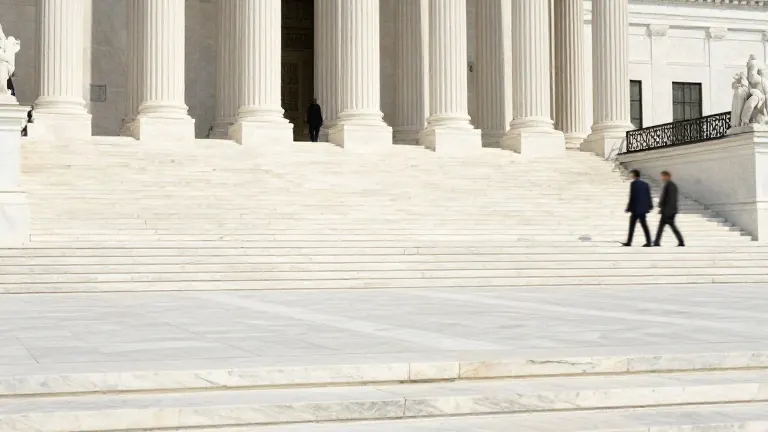
The U.S. Supreme Court is currently reviewing a case that could reshape how federal agencies penalize employers. The central question involves whether the Trump administration can fine a New Jersey farm without offering a jury trial.
The dispute centers on Sun Valley Orchards. The farm faces allegations of poor working conditions for employees on visas. The administration argues that because these workers are part of an immigration work program, the Labor Department has the authority to regulate them. Officials contend that this power includes the ability to impose fines when conditions do not meet legal standards.
Sarah Harris, the U.S. principal deputy solicitor general, argued before the justices that immigration law covers the admission and exclusion of aliens. She stated that this right extends to removing admitted individuals if they fail to meet government-prescribed conditions. Harris told the court she could not conceive of this authority excluding the power to fine.
The justices displayed skepticism regarding the government's position. Justice Neil Gorsuch noted that once past entry, the requirements look more like conditions of employment than entry rules. He questioned whether the administration's claim of immigration authority applies to issues far removed from entering the country.
Justice Amy Coney Barrett raised specific concerns about the penalty phase. She agreed that the farm could be kicked out of the H-2A program and workers removed without an Article 3 court. However, she wondered if the fines were different, suggesting the administration might run into problems imposing them without a judicial process.
Other justices focused on the purpose of the visa policy. Justice Elena Kagan described the scheme as setting minimum standards and parity requirements to protect domestic workers. She emphasized that this has nothing to do with contract rights but rather establishes a baseline to prevent companies from undercutting the domestic labor force.
The court has historically allowed the executive branch to operate outside the court system on certain matters of public interest. The justices acknowledged this precedent while weighing the specific circumstances of this case. The court is likely to release its final decision by the end of June 2027.