Democrats Secure Control of Both Chambers of Congress in Sweeping Midterm Victory
The new legislative majority positions the party to immediately challenge presidential powers, including the dismantling of the Education Department, starting this week.
By Lucas Navarro ·
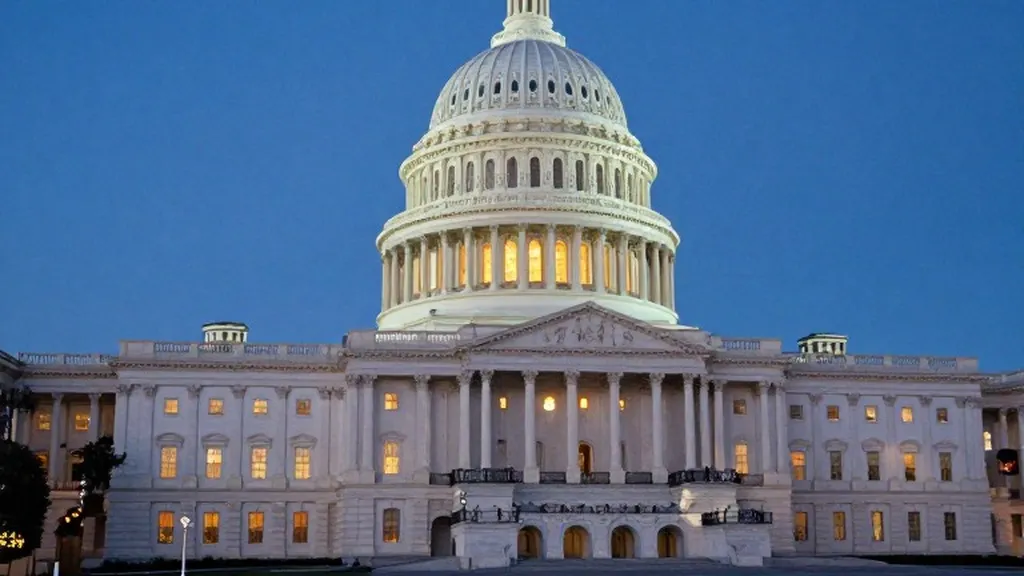
Democrats have secured majorities in both the U.S. House of Representatives and the U.S. Senate following the midterm elections held on Tuesday, November 3, 2026. According to compiled results from Ballotpedia, the Democratic Party picked up at least 43 House seats, including 42 previously held by Republicans and one held by an independent. In the Senate, Democrats gained seven seats, all of which were previously occupied by Republicans. As of 4:00 PM ET on November 6, the House composition stands at a 250 to 157 majority for Democrats, while the Senate is currently at 54 to 44. This shift in power marks a significant change in the federal government's balance, with Democrats winning a majority of governorships and a plurality of state legislative chambers for the first time since before the 2010 elections.
The results signal a strong mandate for the party that spent the last two years in the minority position. Republicans' net loss of at least seven Senate seats places this election in the top 20% of election years in terms of seat swings against a president's party, a threshold often described as a wave election. While the House loss of 42 seats is short of the 48 needed to qualify as a full wave, uncalled races could still alter the final total. The decisive nature of this victory allows the new Democratic leadership to begin implementing their agenda immediately, even before the new Congress formally convenes in January.
One of the first actions taken by the incoming House Democratic leadership involves the U.S. Education Department. Rep. Bobby Scott of Virginia, who is set to lead the House Committee on Education and the Workforce, indicated plans to use the committee's investigative powers to scrutinize the Trump administration's dismantling of the agency. Scott stated he intends to leave no rock unturned as he takes over the panel's authority to issue subpoenas and hold hearings. The committee is expected to explore the administration's oversight of federal student loans and its anti discrimination policies. A day after the election, Scott sent a letter to ten federal agencies reminding them to preserve records that might become part of a congressional review.
Sen. Elizabeth Warren of Massachusetts has also called on her colleagues to hold the administration accountable for turning its back on students. Meanwhile, Democrats on the Senate Appropriations Committee are preparing to use their budgeting powers to rein in the administration's education agenda. Sen. Chris Van Hollen of Maryland said there will be an interest in using the power of the purse to establish guard rails and prevent abusive practices. Van Hollen noted that while it is difficult to rebuild an entity through an appropriations bill, Democrats can try to prevent further damage and seek to reverse the harm that has been done. Last year, Democrats failed to secure broad language in a funding bill to block the dismantling of the Education Department, but with majorities in both chambers, they are preparing to try again.
The White House has responded to the Democratic victory with criticism. Education Department spokesperson Savannah Newhouse said the new majority is plotting to prematurely sabotage Education Secretary Linda McMahon. White House spokesperson Liz Huston accused Democrats of failing American students with disastrous leadership before President Donald Trump returned to office. Trump officials have also threatened to use the veto power against any Democratic bills they see as harmful. This creates a dynamic where investigations and funding conditions may be the primary tools available to the new Congress, as legislative countermeasures face high hurdles.
In the Senate, the new Democratic majority will look to check the executive branch's actions. The party is expected to focus on areas where the administration has made significant policy shifts, including the reshaping of higher education. There is interest in conditioning federal funding to rein in the White House's efforts to cut funding at prestigious universities. Some Democrats are pushing for appropriations language that would order the administration to reverse decisions moving Education Department functions to other agencies, such as putting special education programs under the Department of Health and Human Services. Aaron Ament, president of the advocacy group Student Defense, suggested that it is becoming apparent that the administration does not have the authority to keep dismantling these offices.
The election results also reflect a broader political shift in state governments. Democrats won a majority of governorships, a feat not achieved since before the 2010 elections. This state-level victory complements the federal gains and provides a unified front for policy implementation. In California, Xavier Becerra won the governor's race, becoming the state's first elected Latino governor and the fifth consecutive Catholic governor. His victory highlights the complex political dynamics of Catholic voters in the state, where about 2 in 10 voters in the race were Catholic and mostly supported Becerra. The AP Voter Poll indicated that about 6 in 10 Catholic voters supported Becerra, while white Catholics were split between him and his Republican opponent, Steve Hilton.
The immediate implications of the House majority are already visible on the floor. Rep. Thomas Massie of Kentucky, a Republican who was defeated in a primary earlier this year, moved to force a vote to impeach Defense Secretary Pete Hegseth. Massie read the impeachment resolution from the House floor just hours after the first day of sessions opened following the midterms. The resolution focuses on the war in Iran and includes references to Hegseth's role in military actions in Yemen and Venezuela. Massie argued that Hegseth's actions amounted to high crimes and misdemeanors and that he knowingly executed and implemented unlawful orders. House Democratic Leader Hakeem Jeffries supports the measure, and if most Democrats follow his lead, Massie would only need support from a few Republicans to impeach Hegseth.