Eight-day forecast target for new AI hail system
Researchers at CSU and the University of Wyoming are testing a model that aims to extend warning times for destructive storms well beyond current capabilities.
By Lucas Navarro ·
Hailstorms frequently inflict billions of dollars in damage across the state, driving up insurance premiums and threatening agricultural yields. In response, a collaborative academic team is working to extend the warning window for these events from hours to days using artificial intelligence.
The project involves five professors and four research scientists. The team includes three faculty members from Colorado State University and two from the University of Wyoming. They are integrating two distinct existing technologies to create a more accurate prediction tool.
The system relies on longer-range machine learning models combined with AI-driven radar forecasting. Kristen Rasmussen, an associate professor in the Department of Atmospheric Science at CSU, explained that the algorithm analyzes historical weather observations to identify specific atmospheric conditions that lead to hail formation. The model then projects these conditions forward, aiming to generate forecasts up to eight days in advance.
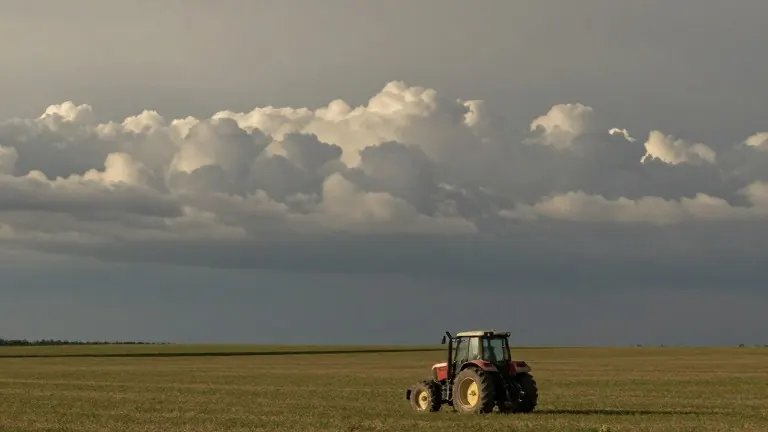
The need for such tools is evident in the experiences of local farmers. Dave Petrocco, a farmer in LaSalle, has worked the land for generations. He noted that severe weather remains a persistent challenge, particularly when crews and equipment are in the fields. During a hail event in June 2026, stones damaged his crops, though the timing allowed the plants to recover. Petrocco described the phenomenon as "stones of the devil from the sky," noting that the unpredictability creates significant stress for operators and owners alike.
Current forecasting methods often provide only short-term alerts. The new AI approach seeks to change this by identifying the "ingredients" for hail production earlier in the cycle. Rasmussen stated that the team feeds these identified conditions into a prediction model to assess future risks. This method allows for a look further ahead than traditional short-range radar techniques.
The team is currently in the development and testing phase. Additional field research is scheduled for spring 2027. The researchers plan to eventually partner with the National Weather Service to integrate the system into practical use. This transition would allow homeowners, drivers, and agricultural workers more time to secure vehicles and protect property before a storm arrives.
Petrocco believes the extra lead time would reduce financial losses and operational stress. He said that having a reliable warning would save money and mitigate risk. The project moves forward with the spring 2027 fieldwork as the next concrete step in validating the eight-day forecast capability.