Seagate launches hybrid drive that pairs 8TB hard drive with SSD
The new FireCuda Forge uses machine learning to move active files to faster flash storage, starting at $699 without the required SSD component.
By Lucas Navarro ·
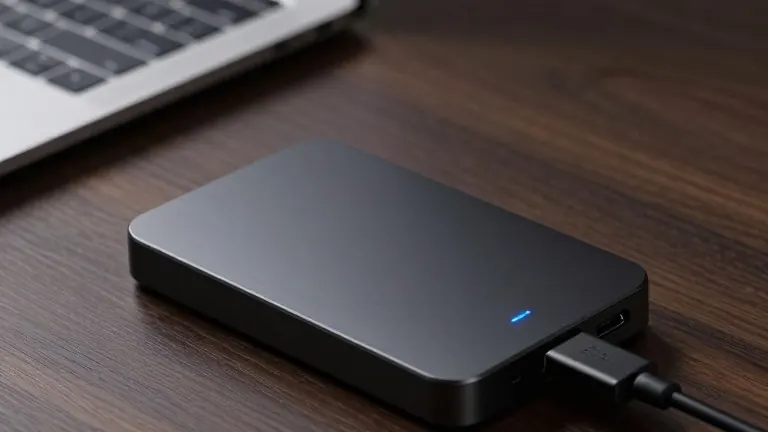
Seagate introduced the FireCuda Forge on Tuesday, an external storage unit that combines a traditional hard drive with a separate solid-state drive to balance capacity and speed. The device uses a machine learning platform called Alkemi to automatically move frequently accessed files onto the faster SSD while keeping less-used data on the larger hard drive.
The company has sold hybrid drives with built-in flash memory for decades, but the Forge marks a shift in configuration. Users now select their own hard drive and SSD pair, rather than relying on fixed internal components. Seagate states that this setup differs from standard network attached storage systems that use SSDs only for temporary caching. Instead, Alkemi dynamically relocates data between the two physical drives based on changing workloads.
The Forge is currently available on Seagate’s online store. The 8TB hard drive model is priced at $699, while the 20TB version costs $899. Both units feature replaceable hard drives, but neither includes the NVMe SSD required for the hybrid functionality. Buyers must purchase that component separately. With a current memory shortage affecting market prices, the total cost of ownership will likely exceed the advertised hardware price.
Users will see the setup as a single connected drive on their computer. As they switch tasks or their storage needs change, the Alkemi system reorganizes data between the hard drive and SSD in the background. This process maintains a unified interface while leveraging the speed of flash storage for active work. Seagate lists maximum read speeds of 2,500MB/s and maximum write speeds of 2,000MB/s for the device.
The performance figures apply to computers running Windows 11 or later, or macOS 26 or later. The Alkemi platform evaluates the user’s current workload to determine which files require faster access. It then moves that data to the SSD as requirements change, aiming to provide SSD-level speed for the most critical files without the high cost of an all-flash drive.
This approach allows for higher total storage capacity at a lower base price than equivalent all-SSD setups. The modular design lets consumers upgrade or replace the hard drive without replacing the entire unit. The system relies on the machine learning algorithm to manage the data flow, ensuring that the faster storage is reserved for the files the user is actively working on.
More Tech · National news · Report a business · Got a Story?