U.N. Vote: 130 Nations Reject U.S. Embargo on Cuba
Support for the annual resolution dropped sharply as the Trump administration pressured allies, leading to a 130-17 vote and a record number of abstentions.
By Lucas Navarro ·
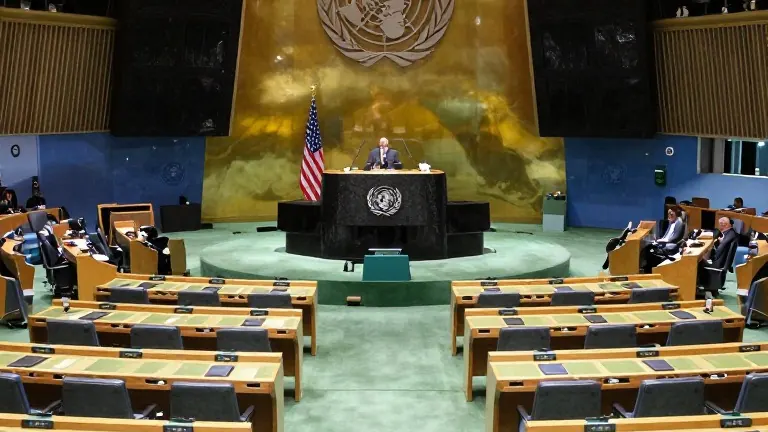
The U.N. General Assembly voted Wednesday to condemn the U.S. economic embargo of Cuba for the 34th consecutive year, marking a sharp decline in international support for the resolution.
The final tally was 130 in favor and 17 against, with 25 nations abstaining. This represents a substantial drop from last year, when more than 160 countries supported the measure and only 12 abstained. Although the resolution is not legally binding, it serves as a formal record of global opinion on the issue.
Several Western nations broke from tradition this year. Germany, Italy, and Latvia abstained from the vote for the first time in 34 years. A group of countries, including Bosnia, Colombia, Costa Rica, Ecuador, Lithuania, Morocco, North Macedonia, Paraguay, and Slovenia, voted against the resolution. Most of these nations had not previously cast a negative vote.
Cuban Foreign Minister Bruno Rodríguez defended the island nation ahead of the vote. "A great power is attacking through economic war a member state of this organization," he said. "Cuba is not a threat. The blockade is a threat."
U.S. Ambassador to the U.N. Mike Waltz argued that the vote was a political maneuver. He told member states, "your vote today is the only thing standing between the corrupt, kleptocratic communist regime and using this body and your vote for another propaganda victory at the expense of the Cuban people."
Tensions between the two delegations escalated on Tuesday when Waltz and Rodríguez engaged in a loud dispute on the assembly floor. Rodríguez approached the podium while Waltz was speaking and called him a liar. Waltz responded by telling the Cuban minister, "This individual needs to back away from this podium. He’s not going to intimidate me in the United States of America," as security personnel attempted to separate them. "You understand who you’re dealing with? This is America. Back up," Waltz added.
Rodríguez posted on X that the U.S. government was using "crude lies" to justify its economic aggression. He noted that Waltz was speaking at the U.N., not in a White House meeting. On the sidelines, Waltz accused a member of the Cuban delegation of attacking an American diplomat who was filming him. The State Department confirmed on Wednesday that the accused official has left the U.S., acting on orders from Secretary of State Marco Rubio.
The U.S. embargo was originally imposed in 1960 following Fidel Castro's revolution and the nationalization of American properties. The policy has long contributed to financial difficulties in the Caribbean nation. In late January, President Trump announced tariffs on countries selling oil to Cuba, a move that has cut off fuel supplies and caused widespread power outages affecting water and internet services.
President Trump recently suggested the U.S. might use military force, stating that American warships could stop in Cuba on their way back from the Iran war. The current diplomatic friction reflects a new phase of contentiousness between Washington and Havana, moving away from the traditional decorum expected at the United Nations.