Rubio Cancels G20 Group Photo After European Diplomats Object to Lavrov
The U.S. scrapped the photo opportunity on Thursday, citing concerns that the controversy would distract from discussions on global trade and security.
By Lucas Navarro ·
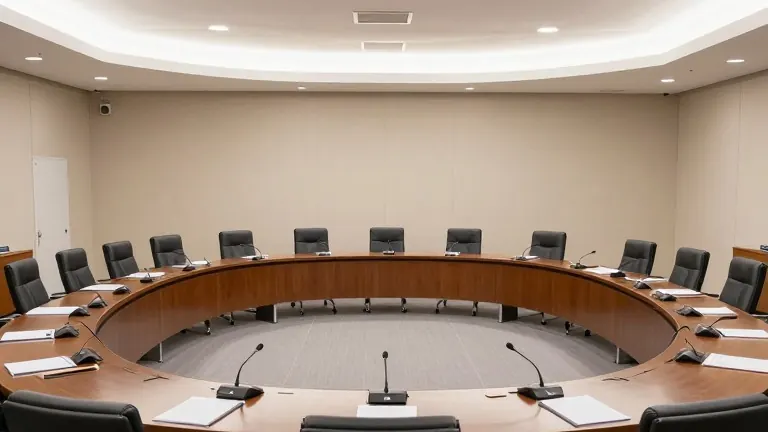
The United States canceled a planned group photograph of G20 foreign ministers in Atlanta on Thursday after several European diplomats objected to being pictured with Sergey Lavrov, the Russian foreign minister. U.S. officials said they made the decision to prevent the visual dispute from overshadowing the two day meeting. The gathering is currently underway and will conclude on Saturday.
Secretary of State Marco Rubio is chairing the session, which is designed to prepare the ground for a leaders summit in December. That summit will be hosted by President Donald Trump at his golf club in Miami. The top diplomats from the twenty largest economies in the world are meeting at a time of deep division over multiple ongoing wars. These conflicts include the war in Ukraine and the U.S. and Israeli campaign against Iran.
The cancellation of the photo was the most visible sign of the tension in the room. European envoys threatened to walk out of the picture if Lavrov was present. Lavrov is in Atlanta even though Russia is conducting heightened attacks on Ukraine. China is represented by a deputy foreign minister, while most other nations sent their senior diplomats.
U.S. officials stated their primary goal is to resolve differences regarding freedom of navigation. They want to address threats in the Strait of Hormuz, the Red Sea, the Black Sea, and the South China Sea. These discussions will cover the roles of Iran, Russia, and China. The group also faces spikes in global fuel costs and uncertainty in trade caused by these geopolitical conflicts.
A looming concern is the possibility of new U.S. military strikes on Iran after the midterm elections. U.S. officials have told several Middle East countries to prepare for potential renewed attacks. This has put regional G20 members, including Saudi Arabia, on edge.
Ian Kelly, a former U.S. ambassador to Georgia and a professor at Northwestern University, called the decision to invite Lavrov politically boneheaded. He noted that the timing creates domestic problems for President Trump just days before the midterm elections. Kelly said the presence of the Russian foreign minister will likely hurt efforts to produce a unified Western approach to the war in Ukraine.
Russia’s foreign ministry said visa issues for its delegation were resolved at the last minute. Spokeswoman Maria Zakharova said those complications created an impression that not everyone in Washington was happy about Lavrov’s attendance. She said he would use the meeting to promote a multipolar world and swift reform of global economic institutions.
South Africa, a founding G20 member, is absent from the meetings in Atlanta. The country is in dispute with the Trump administration and was excluded despite previous invitations. Phindile Kunene, a spokesperson for South African Foreign Minister Ronald Lamola, said the non participation was not voluntary. South Africa said it is ready to participate on an equal footing when the U.K. takes over the presidency next year.
Ukraine, which is not a formal G20 member, was also not invited this year. U.S. officials said they made a conscious choice to include only formal members. The State Department said Rubio wants to advance practical cooperation on shared economic and security challenges. Elaine Dezenski of the Foundation for Defense of Democracies described the meeting as a test of whether the U.S. can build cooperation without full member consensus.