Sunshine Protection Act Faces Expiration as Clocks Fall Back
The Senate has until early January to act on permanent daylight saving time legislation before the new congressional session begins.
By Lucas Navarro ·
The Sunshine Protection Act faces a hard deadline in early January when the current Congress concludes its session and new lawmakers take office. The bill, which would make daylight saving time permanent, passed a major hurdle in the Senate in July. If the legislation expires without final approval, the effort to change the national time schedule will restart from the beginning. This includes new approval processes in both the House and Senate before the measure can reach the president.
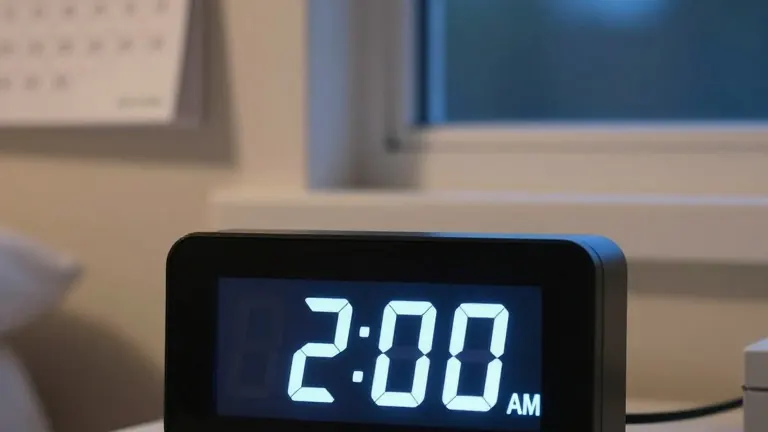
The time change occurred at 2 a.m. local time on Sunday, Nov. 1. Millions of Americans effectively gained an hour of sleep as clocks fell back one hour. This action reversed the spring forward shift that happened in March. The extra hour allows for a later sunrise and an earlier sunset, returning the country to standard time for the winter months.
President Trump has publicly supported the Sunshine Protection Act. He recently accused Arkansas Sen. Tom Cotton, a fellow Republican, of blocking progress on the bill. Trump took to social media to share what he described as Cotton’s personal cellphone number, urging supporters to call the senator to voice their views. Cotton responded by noting that Congress has previously attempted permanent daylight saving time. He argued that the previous attempts failed because Americans found the winter sunrises to be absurdly late.
The practice of shifting clocks dates back to 1918 during World War I. The initial goal was to conserve fuel after European nations implemented similar measures. Congress repealed the requirement after the war but allowed states to choose whether to continue observing it. During World War II and the energy crisis of the 1970s, the United States briefly adopted year-round daylight saving time to reduce energy consumption. These experiments did not last, and the country returned to a twice-yearly change.
Congress established a uniform schedule for the time changes in 1966. In 2005, a law moved the end of daylight saving time from the last Sunday in October to the first Sunday in November. The start date also shifted to the second Sunday in March, extending the duration of the daylight saving period. In 2026, the end of the period fell on Nov. 1. The next start date is set for Sunday, March 14, 2027. This date is later than typical because March 2027 begins on a Monday.
Most of the United States observes the time change, with a few notable exceptions. Hawaii and most of Arizona do not participate in the shift. The Navajo Nation, located partly in Arizona, does observe daylight saving time to align with neighboring communities in New Mexico and Utah. U.S. territories including American Samoa, Guam, the Northern Mariana Islands, Puerto Rico, and the U.S. Virgin Islands also do not observe the change.
The shift affects daily routines, particularly for parents of young children who may experience disrupted sleep schedules. In Boston, the National Weather Service reported a sunrise of 7:16 a.m. and sunset of 5:39 p.m. on Saturday. On Sunday, following the time change, sunrise is scheduled for 6:17 a.m. and sunset for 4:37 p.m. This adjustment gives residents an additional hour in the morning but reduces evening daylight.
Most smartphones are configured to update automatically to reflect the correct time. Major device manufacturers including Apple, Google, and Samsung provide instructions for manual adjustments if the automatic update fails. Mobile carriers such as Simple Mobile and Straight Talk have also published online guides for users to verify their device settings.
More Business · Business Watchdog · Report a business · Got a Story?