Iowa's Nitrate Standard Faces Scrutiny as Cancer Concerns Rise
Regulators have paused reevaluating the 1962 water limit despite new links between long-term nitrate exposure and cancer in the state.
By Amina Howard ·
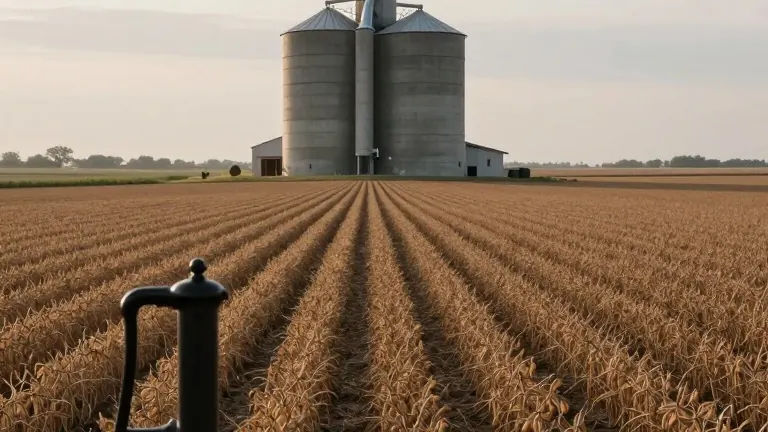
The current administration has closed the office responsible for scientifically reassessing federal drinking water standards, effectively halting the process to update the nitrate limit established in 1962. The U.S. Environmental Protection Agency stated that the work was "largely transitioned" to a different division, but the agency concluded that the existing nitrate standard was not a candidate for revision.
This decision comes as health officials and residents in Iowa connect rising cancer rates to industrial agriculture and nitrate contamination in well water. Iowa currently hosts nearly 11,000 factory farms, which produce more than 170 billion pounds of manure. Synthetic fertilizer and runoff from these operations continue to elevate nitrate levels in the state's water supply, even though the water is treated to meet the federal standard.
Michael Schmidt, general counsel for the Iowa Environmental Council, argued that the current limit fails to account for long-term health impacts. "I think there is more to be done on the standard," Schmidt said. He noted that the "blue baby effect" is a short-term reaction, whereas research increasingly links extended exposure to elevated nitrate with an increased risk of cancer.
The federal standard traces its origins to a 1945 report by Dr. Hunter H. Comly in the Journal of the American Medical Association. Comly documented cases of methemoglobinemia, a condition that turns skin blue due to a lack of oxygen in the blood, in infants fed formula mixed with well water. His work linked the disorder to high nitrate levels in water from or near farms. By 1951, hundreds of infants across several states had been diagnosed with the disease, and 39 had died, according to a literature survey by sanitary engineer Graham Walton.
Walton’s survey recommended a limit of 10 milligrams per liter of nitrate-nitrogen. The U.S. Public Health Service adopted this figure in its 1962 drinking water standards. Although the agency considered international limits that ranged from 20 to 228 milligrams per liter, it settled on Comly’s and Walton’s lower number. The 1962 guidelines cited "many instances of similar occurrences" of blue baby syndrome to support the strict threshold.
Early researchers identified agricultural waste as a primary contaminant. Comly wrote that wells where infants developed cyanosis were situated near barnyards and pit privies. Walton’s 1951 report found that 83 of 129 wells involved in methemoglobinemia cases were within 50 feet of a source of animal or human contamination. Despite these findings, the farming industry continued to rely on nitrogen fertilizers and animal feedlots, creating a tension between agricultural practices and public health concerns.
The regulatory framework has remained static since 1962, even as the drivers of contamination have shifted. While the original concern was acute poisoning in infants, the current debate centers on chronic exposure in the general population. The EPA’s decision to pause the reevaluation leaves the 10 milligram limit in place, a figure originally derived from a small sample of rural cases and animal studies from the mid-20th century.
More Business · Business Watchdog · Report a business · Got a Story?