Second Spanish rail crash kills 68 as election nears
A collision in central Spain killed 68 people on Wednesday, the second high-speed train disaster in the country this year.
By Lucas Navarro ·
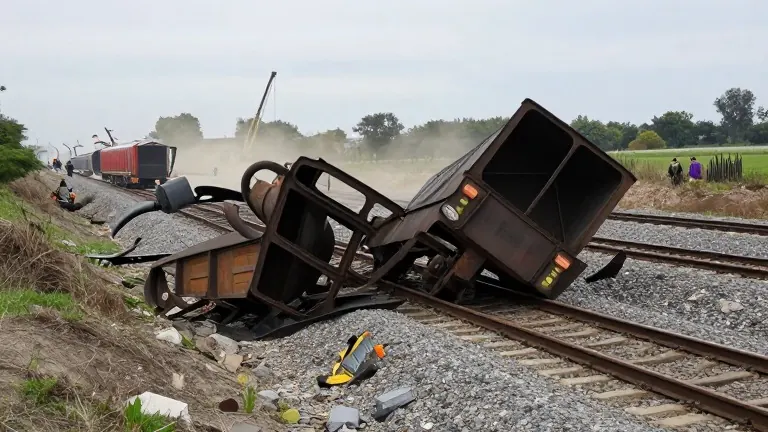
A high-speed train collision in central Spain killed 68 people on Wednesday, marking the second deadly rail accident in the country this year. The crash occurred just four weeks before Spain’s national election, intensifying scrutiny of the safety record of the nation’s extensive rail network.
Search teams using sniffer dogs continued looking for victims on Thursday morning. Cranes were positioned to move carriages that had been thrown down a gravel slope during the impact. Regional spokesperson Esther Padilla said 53 people remained hospitalized, with 15 in critical care. She noted the death toll was still provisional.
Transport Minister Óscar Puente attributed the crash to a computer malfunction in the central command system. He stated that at 8:30 a.m., a security failure stopped trains on a 63-kilometer stretch. A stationary IRYO train was near the town of Urda, while a RENFE train was 25 kilometers behind. Minutes later, control ordered the RENFE train to move without speed restrictions. It struck the stopped IRYO train at 8:53 a.m. Puente said the RENFE train should have remained stopped or moved at reduced speed.
Prime Minister Pedro Sánchez visited the site in Toledo province on Wednesday. He pledged an investigation and safety improvements, calling it unacceptable for Spain to suffer two such accidents in one year. The government declared three days of mourning starting Thursday. This is the second fatal crash on the Madrid-Seville line this year; a January incident killed 46 people when a train derailed and hit another.
Both accidents involved state-owned RENFE and private operator IRYO. Spain opened its high-speed rail to competition in 2021, with IRYO beginning service in 2022. The network, the second largest in the world, carried 45 million travelers last year. Sánchez had called for early elections earlier this month, hoping to capitalize on voter discontent over housing costs.
Political rivals reacted quickly to the disaster. Popular Party leader Alberto Núñez Feijóo demanded a full investigation and canceled his party’s campaign events for the day. Far-right Vox leader Santiago Abascal criticized the government, calling it a criminal organization. Sánchez faces tough questions about rail safety alongside existing debates on migration and corruption allegations against his party and wife.
The Madrid-Seville high-speed line remains shut down, stranding thousands of travelers. RENFE will not sell online tickets for the route until mid-December. The crash site is located in the province of Toledo, a region characterized by olive groves.