Abu Dhabi Talks: 20% of Ukraine Occupied
Negotiators from the US, Russia, and Ukraine meet for the fourth US-mediated round this year amid a dispute over whether European officials will attend.
By Andrew Kovalenko ·
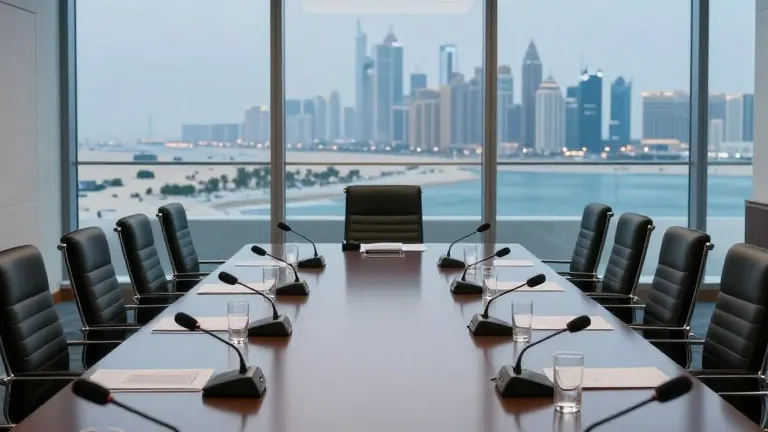
The fourth US-mediated peace negotiation of the year begins Tuesday in Abu Dhabi.
The talks aim to resolve a conflict that has persisted for nearly five years, yet analysts anticipate limited movement on core issues. The central dispute remains the status of territory, as Russian forces currently occupy roughly 20 percent of Ukraine, including Crimea and parts of the eastern Donbas region. US President Donald Trump has recently urged Kyiv to cede this land to secure a deal, a stance that critics argue favors Moscow. The US also signed a deal last month to purchase Russian diesel, a move some view as providing revenue that helps sustain the war effort.
A significant logistical question surrounds the participation of European allies. Kremlin spokesman Dmitry Peskov stated on Monday that the talks would not include European officials. This comment contradicted a statement from French Foreign Minister Jean-Noel Barrot, who said officials from France, Britain, Germany, NATO, and the European Commission would be present for the November 10 and 11 meeting. An EU official confirmed that national security personnel from those entities would be on site, though their exact role remained unclear. The US delegation is led by envoys Steve Witkoff and Jared Kushner. Ukraine’s team is headed by foreign intelligence chief Rustem Umerov, while former Culture Minister Vladimir Medinsky leads the Russian delegation.
The core obstacles involve security guarantees and territorial integrity. Matthew Boyse, a senior fellow at the Hudson Institute, noted that Putin has maintained a rigid position regarding territory, describing it as "my way or the highway." Ukraine seeks a security guarantee and Russian withdrawal, while Russia opposes NATO membership for Kyiv and the deployment of foreign troops. Arkady Moshes, a political scientist at the Finnish Institute of International Affairs, warned that Ukraine’s sovereignty is at stake. He argued that a peace agreement preventing Ukraine from choosing its alliances would be difficult to accept.
The outcome of these negotiations may also affect post-Soviet states in Europe, including Belarus, Moldova, Georgia, and Armenia. Moshes said that if Ukraine capitulates, these countries face a higher threat of Russian influence or annexation. The US delegation has indicated that NATO will remain central to European defense, but no country should have a veto over another’s security choices.
Technical issues such as grain supplies and a Black Sea ceasefire may see progress, according to Olexiy Haran, a professor at the National University of Kyiv-Mohyla Academy. However, experts do not expect a comprehensive peace accord. Trump, now a lame-duck president following midterm losses, may push harder for a ceasefire in his remaining two years in office. Boyse observed that the White House appears to be seeking a grand bargain that expands negotiations to the European security order, often by meeting Russia’s demands rather than Ukraine’s.
Putin’s negotiating style is characterized by demanding the maximum and waiting for others to compromise, Boyse said. The last time a breakthrough appeared likely was in Istanbul in March 2022, when relative military strengths were unclear. Since then, tit-for-tat attacks on energy sites have intensified, and the core differences over territory and security remain unresolved.