
Treasury yields hold above 5% after inflation data surprises markets
The 10-year Treasury yield remained above 5% on Friday following October producer price data that showed a smaller monthly increase than expected but a record annual rate, reinforcing bets on a Federal Reserve rate hike.
By Andrew Kovalenko ·
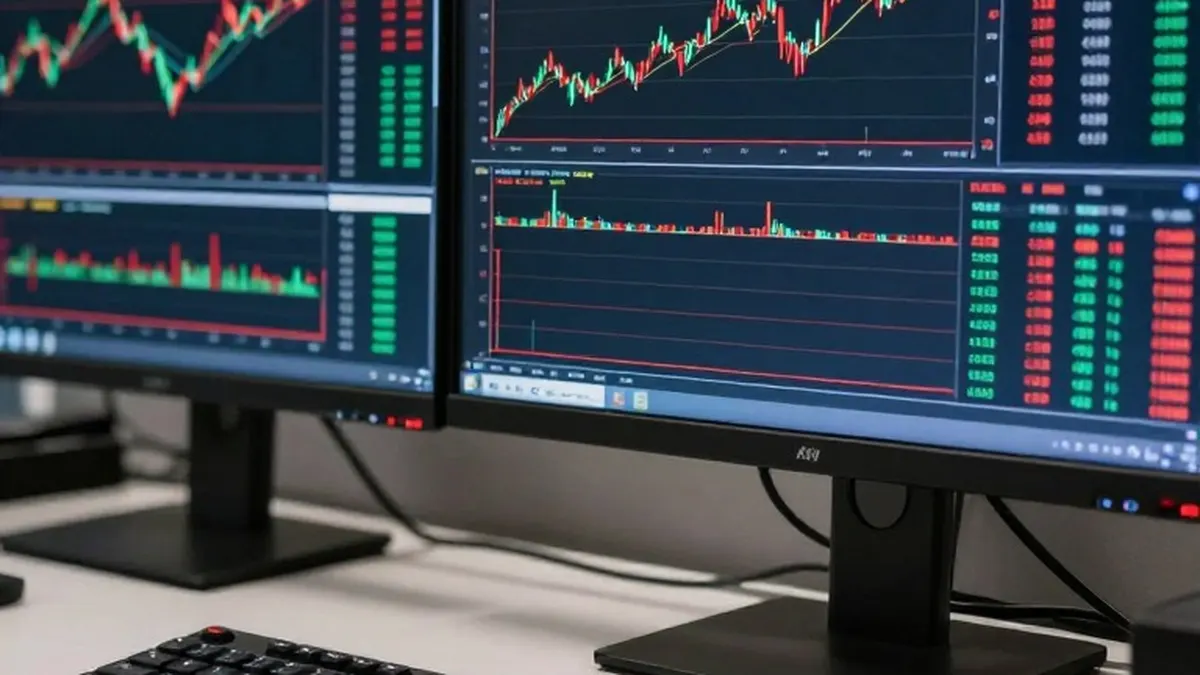
The yield on the 10-year U.S. Treasury bond remained above the 5% threshold on Friday, November 13, 2026, after the release of October's producer price index. This economic indicator, which tracks wholesale prices, showed a monthly increase that was slightly lower than what market analysts had projected. Despite the slightly softer monthly figure, the overall yield climbed by 5 basis points to exceed 5.15%.
This specific Treasury security serves as a critical benchmark for various consumer credit products, including mortgages, auto loans, and credit card debt. The movement in this yield directly impacts borrowing costs for households and businesses across the United States.
Other Treasury benchmarks also experienced upward pressure on Friday. The 2-year Treasury note yield, which is typically more reactive to short-term Federal Reserve monetary policy decisions, increased by less than 1 basis point to reach 4.872%. Meanwhile, the 30-year Treasury bond yield, a metric often influenced by long-term geopolitical risks, rose by more than 5 basis points to hit 5.481%. It is worth noting that bond yields and prices move in opposite directions, with one basis point equating to 0.01%.
The October producer price index recorded a 0.3% rise from September, a figure lower than the 0.4% increase predicted by economists polled by Dow Jones. However, on an annual basis, the index surged 6.5% over the past 12 months. This represents the largest annual increase in the index since November 2022, highlighting persistent inflationary pressures in the wholesale sector.
Chris Rupkey, chief economist at FWDBONDS, described the inflation report as having no silver lining. He pointed out that core producer prices, which exclude volatile food, energy, and trade services, increased by 0.5% in October. Rupkey noted that it is fundamental economic theory that producer prices lead consumer prices, suggesting that consumers may soon face a fresh wave of inflation from the manufacturing sector.
Friday's market activity follows a significant jump in yields during Thursday's session, when the 10-year Treasury yield surged more than 13 basis points to break above the 5% mark. During the same period on Thursday, the 2-year yield soared by more than 15 basis points, reflecting a sharp shift in market sentiment regarding future interest rates.
Financial markets are now treating a Federal Reserve interest rate hike at the next meeting as a certainty. According to the CME Group's FedWatch tool, traders are pricing in 100% odds of a rate increase at the December 9 meeting. The probability of a quarter percentage point hike stands at 86%, while the chance of a half point increase is estimated at approximately 14%.
Energy markets also played a role in the broader economic picture on Friday. Oil prices are set for a second consecutive weekly decline as the likelihood of renewed U.S. strikes against Iran diminishes. Early trading on Friday saw choppy price action. U.S. West Texas Intermediate futures for December delivery fell by 0.1% to $88.63 per barrel, while Brent crude, the international benchmark, rose by 0.3% to $96.11.
More News · National news · Report a business · Got a Story?