Kyushu Emerges as Cost-Effective Alternative to Tokyo for American Travelers
The island’s volcanic terrain, hot springs, and Fukuoka’s affordable luxury offer a budget-friendly route to Japan’s cultural depth.
By Amina Howard ·
Over two million Americans visit Japan each year, with the vast majority targeting Tokyo. The cost of a metropolitan vacation has risen sharply; a three-day trip to Tokyo Disneyland and DisneySea costs a family of four approximately 350,000 yen, or 2,200 U.S. dollars. Kyushu, located southwest of Tokyo, presents a lower-cost option for visitors seeking cultural depth without the premium price tag of the capital.
Radu Cernia, general manager of The Ritz-Carlton Fukuoka, notes that the island appeals to travelers who have already visited Tokyo, Kyoto, and Osaka. He states that these destinations often consume a traveler’s budget quickly, whereas Kyushu offers a different experience. The island comprises seven prefectures with distinct characteristics. Fukuoka serves as the northern anchor, known for its food and efficient transit, while Nagasaki blends coastal scenery with history. Kumamoto and Oita feature volcanic landscapes, and Kagoshima offers a subtropical climate.
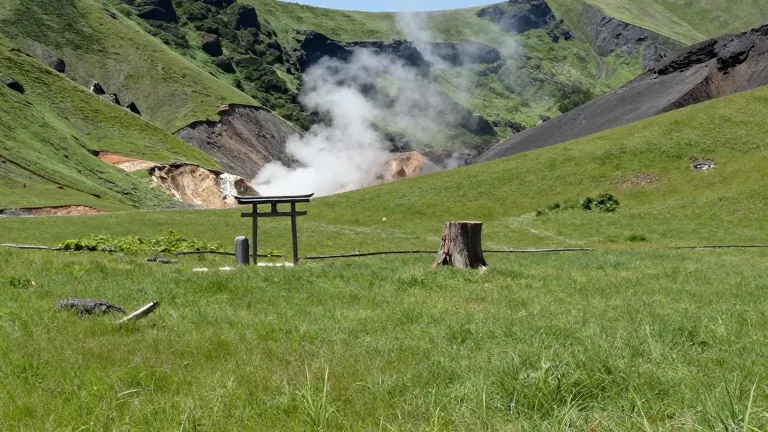
Travelers can reach Kyushu by flying into Tokyo or Osaka on carriers such as JAL, ANA, United, or American, then connecting to Fukuoka. The Kyushu Shinkansen and limited-express rail services link the region’s cities with rural onsen towns. The Aso region, centered on one of the world’s largest volcanic basins, provides a stark contrast to urban Japan. The area is defined by open meadows, steaming vents, and highland contours. Teno, a village with a history spanning more than 2,000 years, sits within this landscape. Its grounds hold the Great Cedar of Teno, a massive ancient stump near Kokuzo Shrine, which was rebuilt in the Edo period after a fire.
Aso Uchinomaki Onsen serves as a restorative hub in the basin, featuring more than 100 spring sources. Establishments such as Sozankyo and Takanosho offer accommodations with mineral-rich baths. Sakura no Yado, a 150-year-old traditional folk house, provides two-level units and dining that focuses on local agricultural products. In the Uchinomaki district, the Grassland Conservation Center explains how controlled burning and community stewardship maintain the landscape. Horseback riding is available across the open fields, allowing visitors to pass thousand-year-old Buddhist markers.
The region’s geological activity has left visible marks on the environment. The 2016 Kumamoto earthquakes altered roads and hillsides, and a fallen bridge on the outskirts of Aso remains as a memorial. A nearby earthquake museum incorporates a condemned former school into its complex. A 6.8 magnitude quake struck Kumamoto Prefecture in July 2026, causing collapsed homes and landslides, though reports indicate operations have largely returned to normal. Crossing into Miyazaki Prefecture, Takachiho Gorge offers a flat path along basalt walls with viewpoints overlooking waterfalls and emerald water. Nearby Tadewara Marsh features broad wetlands lined with seasonal flowers such as iris and azaleas.
Fukuoka offers a polished urban conclusion to a Kyushu itinerary. The Ritz-Carlton Fukuoka, which opened in 2023, contains 167 rooms priced at roughly half the cost of its Tokyo counterpart. Its Genjyu restaurant on the 18th floor serves teppanyaki featuring wagyu beef from Iki Island. The One Fukuoka Hotel offers 203 rooms with rates starting at 415 U.S. dollars per night, compared to 570 U.S. dollars at the Ritz-Carlton. A 192-key Ace Hotel with Seattle origins is scheduled to open next year, adding another option to the city’s lodging market.
Cruise lines including Azamara, Celebrity, Oceania, Royal Caribbean, Seabourn, and Windstar have scheduled stopovers in Fukuoka for 2027. Beginning in August 2028, the Viking Neptune will include Fukuoka on a new 15-day Japan Discovery itinerary. Port schedules indicate that ship traffic peaks during the spring and fall seasons when temperatures are mild and humidity is lower.