Study Links Indoor Wood Burning to Significant Child Health Risks
Research across six European cities shows that indoor air from wood burning can expose children to pollutant levels comparable to traffic exhaust, with some areas exceeding WHO guidelines.
By Lucas Navarro ·
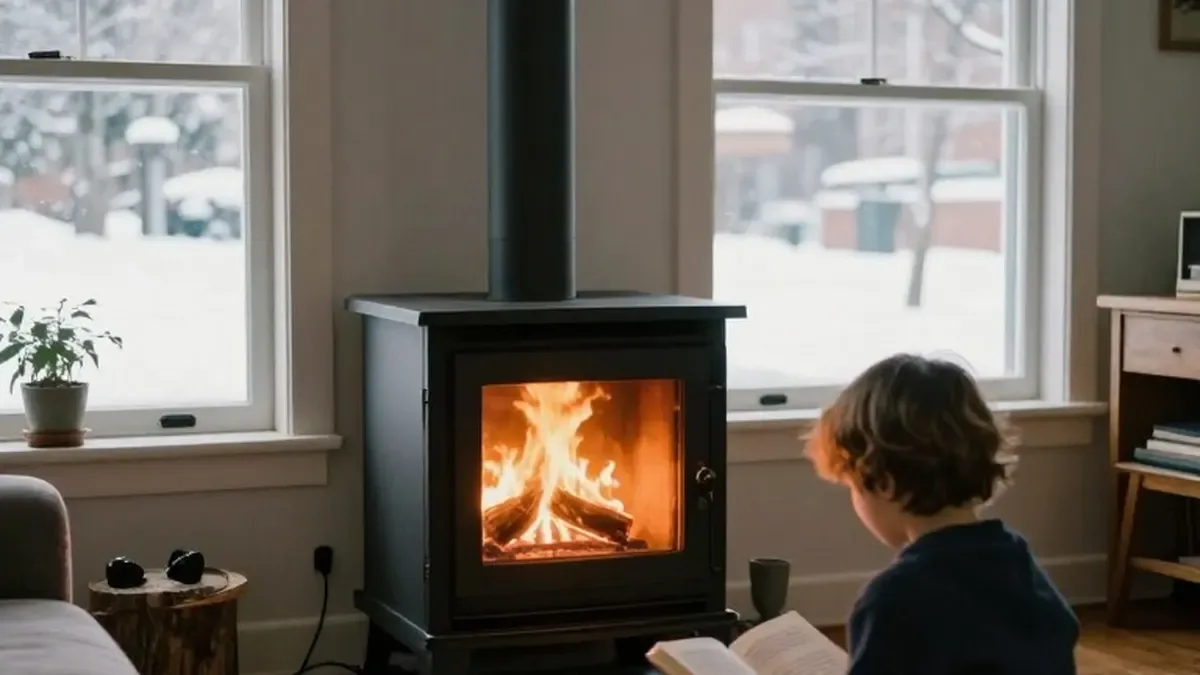
New research conducted across six European cities indicates that children’s exposure to air pollutants from household wood burning may be as significant as their exposure to traffic exhaust. The study, which focused on polycyclic aromatic hydrocarbons or PAHs, a group of pollutants released during fuel combustion, highlights the importance of indoor air quality in places where young people spend considerable time.
Scientists collected air samples in homes, schools, and sports centres in Athens, Barcelona, Colchester, Copenhagen, Helsinki, and Lisbon. Dr Barend van Drooge, a senior author from Barcelona’s Institute for Environmental Assessment and Water Research, noted that certain PAH compounds are linked to cancer risks after long-term exposure, as recognized by the International Agency for Cancer Research. He also cited evidence suggesting these pollutants can delay cognitive development in children.
The data revealed that urban areas with a culture of wood burning, specifically Colchester and Athens, recorded the highest levels of PAHs. In these two locations, exposure levels exceeded the guidelines set by the World Health Organization. In contrast, Barcelona and Lisbon, where wood burning is less common, had the lowest concentrations.
Maria Antonia Aretaki, the first author of the study, emphasized that understanding pollutants in children’s daily environments is a critical step for health protection. She highlighted the particular vulnerability of children to environmental hazards and the potential long-term health implications of exposure during early life stages.
Among the various locations measured, sports centres had the lowest pollutant concentrations. Schools generally followed, although some facilities in Lisbon were affected by nearby busy roads. While ventilation and general indoor sources played a role, homes in areas with wood burning contained the highest PAH levels. Many of these residences featured open fireplaces or stoves.
Seasonal variations were a major finding, with winter concentrations significantly higher than those in summer. In Colchester, high-molecular-weight PAH levels in homes during winter were more than ten times greater than in summer. Low-molecular-weight PAHs were approximately three times higher in the cold months.
Dr van Drooge expressed surprise at how substantial wood burning has become as a contributor to overall urban PAH presence, despite its known status as an emitter. However, he clarified that none of the studied cities exceeded limits for unacceptable lifetime cancer risk.
Within the United Kingdom, the impact of wood burning is likely not limited to Colchester. An analysis by University College London researchers found that Colchester ranked 120th out of 333 local councils for the density of wood burners. Other towns such as Worthing, Norwich, and Reading had roughly four times more wood burners per square kilometre.
A separate winter study in Anglesey involving 53 primary school children found that those living in homes with wood burners faced over three times more particle pollution than their peers in non-wood-burning households. This study also confirmed that homes generally had higher air pollution levels than schools.
In Greece, the practice of wood burning increased during the financial crisis that began in 2008 as heating oil costs soared. This shift contributed to increased deaths related to particle pollution in Athens, particularly among those over 70. In some Greek towns, winter PAH levels are reported to be 100 times greater than in summer.