Rams defense forces Chargers into 24-9 defeat in Inglewood
Los Angeles held the San Francisco divisional rival to 295 yards while the offense struggled to find rhythm for the first time in Sean McVay's tenure.
By Andrew Kovalenko ·
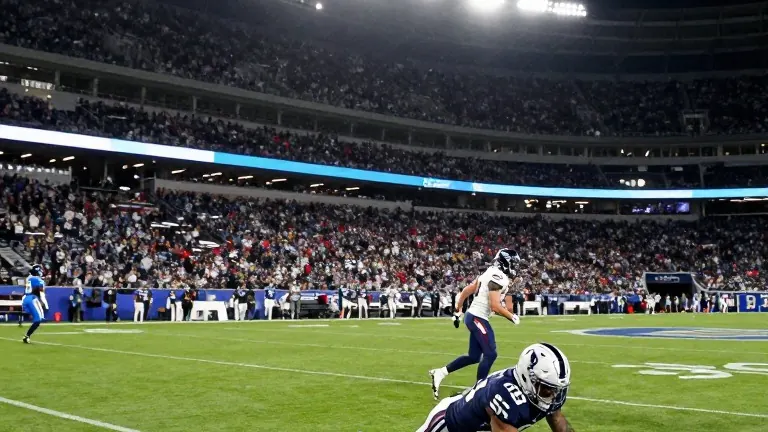
Twenty-eight minutes elapsed before the Los Angeles Rams recorded a first down, a span that lasted longer than the 45-yard interception return by safety Quentin Lake in the first quarter. The defensive unit carried the team to a 24-9 victory over the San Diego Chargers at SoFi Stadium on Sunday, compensating for an offense that stalled early in the contest.
The Rams, now 4-4, limited the 0-7 Chargers to 295 total offensive yards. Only 54 of those yards came in the first half, a total that included a Hail Mary attempt. The defense stopped San Diego on 60% of its third-down attempts and prevented a conversion on the Chargers' single fourth-down try. The unit allowed just 2.6 yards per carry and recorded three tackles for loss.
Los Angeles prevented a touchdown entirely, holding San Diego short of the red zone four times. When the Chargers did reach the Rams' 20-yard line, the defense forced a field goal attempt. Cornerback Trent McDuffie, returning from a two-game absence due to a groin injury, played a central role in that effort. Eight of his first nine tackles held the Chargers to gains of five yards or fewer.
McDuffie also threw an interception in the third quarter that set up a screen-pass touchdown for Puka Nacua, giving the Rams a decisive lead. Head coach Sean McVay praised the cornerback's activity on the field, noting his effectiveness in run fits and as a blitzer. However, both McDuffie and cornerback Jaylin Watson left the game early with injuries to their back and shoulder, respectively. McVay said he had no status updates on either player after the game.
The offense struggled to gain traction until the end of the first half. This marked the first game in McVay's tenure where the unit failed to convert a first down in its initial five possessions. Quarterback Matthew Stafford threw several passes into the dirt or out of bounds, opting to avoid testing receivers against tight coverage. The Rams finally moved the ball and scored on a two-minute drive to close the first half.
McVay acknowledged the poor start, stating that establishing momentum or rhythm was non-existent for much of the game. He credited Stafford for stringing together a drive that gave the team a lead, describing the effort as unreal given how poorly the unit had played. The offense continued to face challenges in the second half, with McVay calling a roll-out pass on 3rd-and-1 that resulted in a throwaway and a punt by Ethan Evans.
The Rams' best offensive sequence came on the opening drive of the third quarter, where they committed to the run. After managing only five carries for 10 yards in the first half, McVay called five consecutive carries for Blake Corum to start the second half. Corum gained 55 yards on those plays, including a 23-yard touchdown. The following drive began with two handoffs to Kyren Williams for nine yards, but the unit stalled after four dropbacks and had to punt.
Linebacker Omar Speights said the defense's mindset focuses on getting stops and turnovers regardless of the offense's performance. He noted that the unit prides itself on controlling the ball and making plays. Despite a minor issue where Aaron Donald failed to corral a fumble from a Wesley Bailey strip-sack, allowing the ball to bounce out of bounds, the defense's performance dictated the outcome. Donald lay on the field in mild embarrassment after the gaffe, and teammates joked about the moment on the sidelines.
McVay said he would give Donald a hard time about the missed opportunity, noting that Donald could not even look at him during the post-game moments. Receiver Puka Nacua said the team must continue to build and improve its execution. He emphasized that the offense must play complementary football to match the defense's effort, as there is still a lot of room for improvement.