Payroll Hierarchy: Brewers Defy Market Size to Win World Series
The 19th-highest payroll in baseball beat the 25th to capture a title, complicating the owners' push for a strict salary cap ahead of a potential lockout.
By Andrew Kovalenko ·
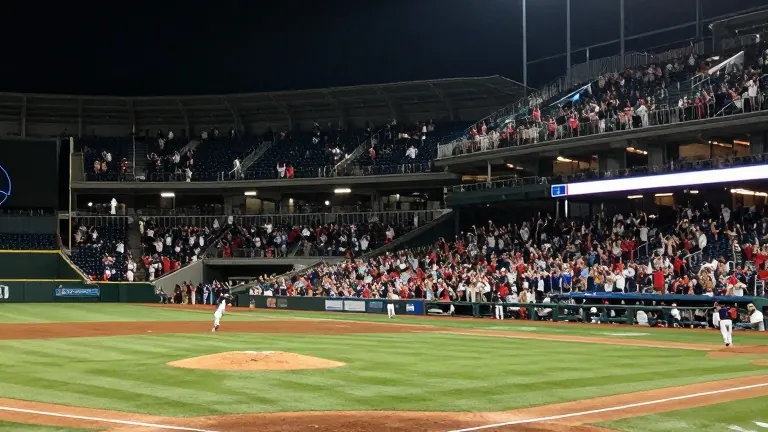
The core argument for a salary cap in Major League Baseball just took a direct hit in St. Petersburg, Florida. On Wednesday night, the Milwaukee Brewers defeated the Tampa Bay Rays 4-1 in Game 5 of the World Series to claim their first franchise championship. The victory ends a 44-year drought and complicates the financial model that owners have used to justify capping player spending for small-market teams.
The Brewers entered the postseason as the 19th-highest payroll in the league as of August 31. The Rays sat lower at 25th. This was the first World Series since 1991 to feature two teams from the bottom half of the salary structure. The Brewers led the majors with 103 regular-season wins and finished the postseason 11-2, including a sweep of the Los Angeles Dodgers in the NLCS.
The financial implications arrive at a tense moment in labor negotiations. Owners are pushing the players’ association to adopt a salary cap, arguing that small markets cannot consistently compete. A management lockout is likely to begin on December 2, which could threaten the 2027 season. The Brewers' success suggests that competitive parity is possible without the strict financial ceiling owners seek.
Jacob Misiorowski, the 24-year-old two-time All-Star, anchored the pitching staff. He threw 5 2/3 scoreless innings, allowing only two hits. He was pulled from the game due to a right calf cramp. Misiorowski broke the World Series velocity record on the first pitch of the series last Friday with a 103.5 mph fastball. In Game 5, he opened with 12 consecutive four-seamers between 100.9 and 103 mph. He finished with 86 pitches, 58 of which were strikes.
Rookie Cooper Pratt, who made his major league debut in June, set a series record with six straight hits. He recorded two RBIs and a hit in the second inning. World Series MVP William Contreras hit an RBI double in the sixth to extend the lead to 4-0. Jackson Chourio set a five-game series record with 11 total hits. The Brewers scored a major league-low 32.1% of their runs on home runs during the series, relying on small-ball tactics that fit their market profile.
Manager Pat Murphy, 67, guided the team to the title. He survived a heart attack in 2020 and won NL Manager of the Year in 2024 and 2025. Murphy emphasized the team's cohesion over individual statistics. He said the 2026 group would be remembered forever because they prioritized winning together. Captain Christian Yelich told reporters that the city had waited a long time for this moment. Principal owner Mark Attanasio addressed fans from the postgame stage, confirming that Milwaukee had its world championship.
The Rays, an expansion team that debuted in 1998, dropped to 0-3 in World Series history after defeats in 2008 and 2020. Only the Brooklyn Dodgers and Detroit Tigers have lost in their first three series appearances. Tampa Bay became the fifth team in history to lose the first three games of a World Series and then lose Game 5. Drew Rasmussen, the Rays' ace, pitched on three days' rest and allowed one run and two hits in four innings.
The Brewers' previous appearance in the World Series was in 1982. That team, known as Harvey's Wallbangers, blew a 3-1 lead in the sixth inning of Game 7 to lose 6-3 to the St. Louis Cardinals. The 1982 roster included five Hall of Famers: Robin Yount, Paul Molitor, Ted Simmons, Don Sutton, and Rollie Fingers. Fingers missed the postseason with a forearm injury. The 2026 team finished what that group could not.
The Brewers have now won two MLB championships, the other coming in 1957 with the Atlanta Braves, who moved from Milwaukee for the 1966 season. The Rays' loss marks the end of a series where both teams combined for just four home runs. The Brewers' three home runs accounted for the majority of their offensive output in the series. The team's success in the postseason included seven comeback wins.
This was the first Series since 1991 between teams in the bottom half of payrolls. The Brewers' victory provides a data point in the ongoing debate over financial fairness in the sport. The team's path to the title required overcoming a 4-3 extra-inning loss in Game 4, when they were three outs away from a sweep in the 12th. The bullpen faltered in that game but held firm in the final two innings of the deciding contest. Trevor Megill closed the game by retiring Richie Palacios on a grounder.
More Business · Business Watchdog · Report a business · Got a Story?