
LAX serves as the eerie backdrop for new novel 'Passengers'
Author Alexander Maksik's story about a delayed flight to Paris earned a spot on the 2026 National Book Award longlist.
By Amina Howard ·
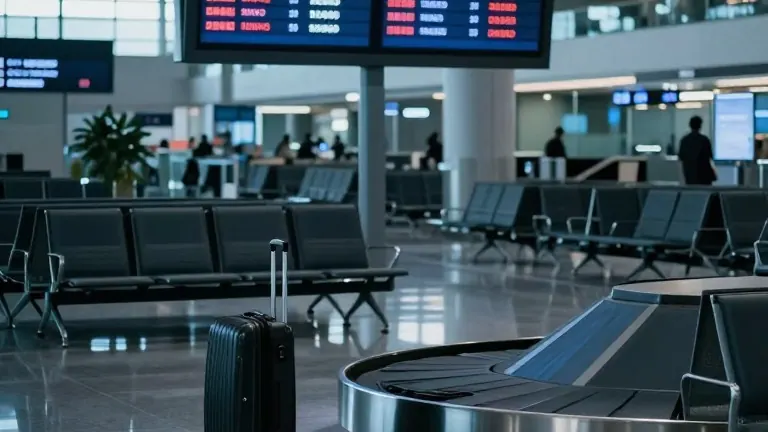
Readers of the new novel “Passengers” will find themselves stuck at Los Angeles International Airport, waiting for a flight to Paris that never arrives. The book places a father and daughter in a terminal where something feels deeply wrong outside the glass walls. It is a story about an impending apocalypse and the dangers of looking back fondly on the past.
The author, Alexander Maksik, was born in Los Angeles and spent his childhood at LAX. He described the airport as a place of wonder and adventure during his youth. He recalled standing before the large black flight board, dreaming about the destinations listed on it. Over time, that sense of romance faded. Airports began to feel uglier to him, a change he could not pin to a specific moment.
Maksik chose this specific setting because he wanted to use a place once full of possibility as a stage for dread. He noted that the airport’s shift in character made it a fitting location for a story about waiting and uncertainty. The novel follows the couple as they endure endless delays while the world outside seems to unravel.
The book received recognition this year when it was longlisted for the 2026 National Book Award for Fiction. Maksik described the honor as a tremendous surprise. He said the award was deeply gratifying and an honor regardless of the novel’s other history. He noted that his agent of nearly 20 years had reacted negatively to the manuscript and ended their relationship over it. That professional fallout made the award feel all the more rewarding to him.
Maksik is the author of several previous novels, including “You Deserve Nothing” and “Shelter in Place.” He shared details about his writing life in a recent email interview. He said he reads a lot in translation and tries to keep up with French, though he has hit a plateau with that language. He recommended works by Bohumil Hrabal, Vivek Shanbhag, Annie Ernaux, and Marguerite Yourcenar to readers.
He also spoke about the people who shaped his love of reading. He credited his parents for making books feel magical and holy. He listed several teachers who had an impact, including Tom Johnson, Bob Brock, Paul Hoornbeek, Alan Gurganus, and Peter Orner. Orner introduced him to Hrabal, a writer whose work Maksik continues to admire.
The author admitted that he is reluctant to read fiction that feels like it is making an argument or teaching a lesson. For him, language is the most important element. If the language is compelling and alive, he will read anything. If it is dead, no plot will hold his attention. He recalled a powerful reading experience on the Croatian island of Hvar, where he read Annie Ernaux’s “A Simple Passion” on a bench by the harbor. The isolation and the physical beauty of the location intensified the impact of the novel. He hopes to remember that experience vividly for the rest of his life.