Egypt Succession Plan: Military Academy to Vet Future Leaders
President El-Sisi proposes a 30-month training program for candidates, aiming to secure military control over the political transition after his departure in 2030.
By Lucas Navarro ·
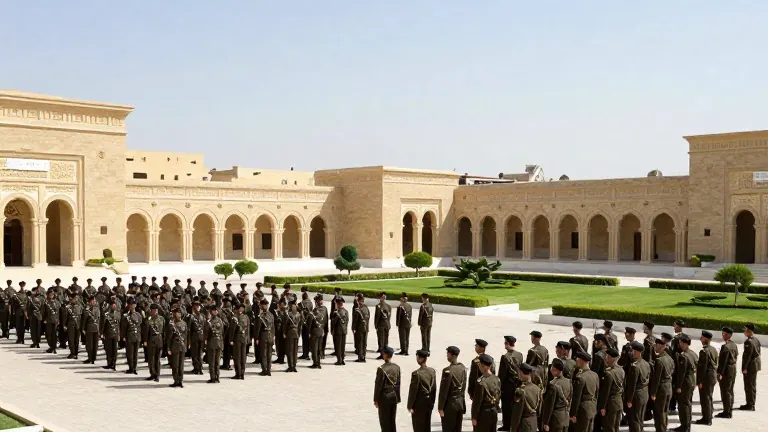
Egyptian President Abdel Fattah el-Sisi has outlined a specific mechanism to select his successors, anchoring the process in the country's military institutions.
El-Sisi made the announcement during a graduation ceremony at the Egyptian Military Academy, stating he will leave office when his third term concludes in April 2030. This declaration surprised political observers who had expected him to amend the constitution to remain in power. He insisted that "no one would tamper with" the constitution, marking a distinct shift from previous rhetoric.
The path to this announcement has been marked by inconsistent signals from the Egyptian leadership. In 2013, after leading a coup against President Mohamed Morsi, El-Sisi denied intentions to run for president. By 2017, he stated a commitment to preserving the existing term limits. However, he later supported constitutional amendments in 2019 that extended his time in office. A judicial source told Mada Masr last week that the current announcement leaves room for a popular call to keep him in power, a pattern that has defined his tenure.
The economic context informs the urgency of the succession planning. Egypt’s national debt stands at 81 percent of gross domestic product. Interest payments alone now exceed combined spending on healthcare, education, wages, and subsidies. Since 2014, the Egyptian pound has lost more than 80 percent of its value against the US dollar, and cumulative inflation has surpassed 460 percent. These figures have fueled criticism regarding fiscal policy and government spending.
El-Sisi’s proposal includes the creation of a committee of experts to draft legislation for a new selection process. This system would identify hundreds of highly educated Egyptians for specialized training at the Egyptian Military Academy. The criteria are strict: applicants must hold doctoral degrees, be between the ages of 40 and 50, and commit to 30 months of study on the Egyptian state. The program is designed to train not only future presidents but also ministers, governors, and members of parliament.
The plan relies heavily on existing constitutional provisions that grant the military extensive authority. El-Sisi cited Article 200 of the constitution, which was amended in 2019 to give the armed forces responsibility for maintaining the country’s democracy and the rights of its people. He described the article as a protection against those who do not understand the meaning of the state. Article 234 further requires presidential approval from the Supreme Council of the Armed Forces before appointing a defense minister. Together, these articles provide the military with substantial control over political appointments.
This structure appears designed to preserve military dominance after El-Sisi’s departure. A civilian-led transition might invite investigations into events from 2013, including the removal of President Morsi and the detention of thousands of activists and journalists. A military-managed pipeline reduces the likelihood of such scrutiny. A member of parliament recently noted that El-Sisi has said in private meetings that he prefers to step down voluntarily rather than wait for the military to force his exit.
The next steps involve the drafting of legislation by the proposed committee of experts. The specific timeline for the committee’s formation and the initial cohort of trainees has not yet been announced. The military remains the central figure in shaping the rules for Egypt’s next leadership transition.