Colorado Rail Tax Passes, Talks Resume
Voters approved a 0.333% sales tax to fund the CoCo rail line, allowing officials to restart track access negotiations with BNSF and Union Pacific.
By Andrew Kovalenko ·
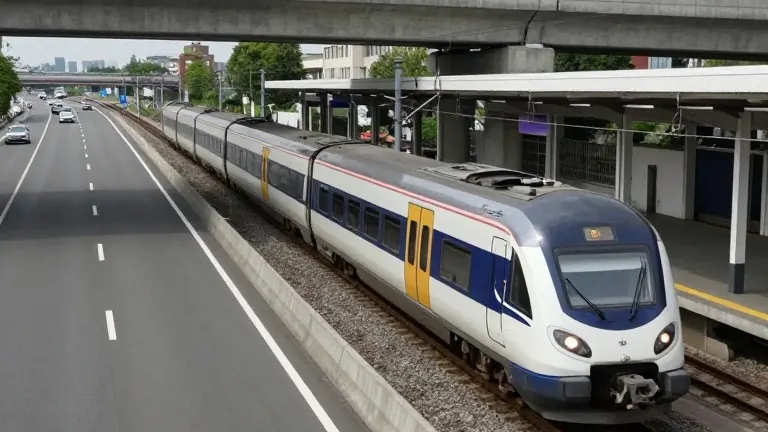
Voters in 31 Colorado municipalities approved a new sales tax to fund the Colorado Connector rail line, clearing the final political hurdle for the project. The Front Range Passenger Rail District will return to negotiations with its railroad partners next week to finalize track access agreements.
The measure, Issue 7A, passed with 55% support against 45% opposition. The tax imposes a 0.333% district-wide levy, equivalent to 33 cents on a $100 purchase. Sal Pace, the district's general manager, called the result a historic win for a project that has taken decades to develop.
The new revenue stream is projected to generate $295 million annually. This funding secures the timeline for the full 12-stop intercity route, which is on track to launch by 2032. The district already has enough capital to begin service between Denver and Fort Collins by 2029.
The northern segment will operate as a joint service with the Colorado Department of Transportation and the Regional Transportation District. This route is designed to alleviate congestion on Interstate 25, a corridor that has long divided communities. Pace stated that the goal is to connect the region rather than let the highway separate it.
Negotiations with BNSF for the northern track are described as close to completion. Discussions with BNSF and Union Pacific for the southern segment, which runs from Denver to Pueblo, are expected to start in early 2027. The railroads own the tracks that the CoCo service will use.
The district must install positive train control, a federal safety system, on the northern line. John Putnam, chair of the board, identified this as the project's largest single capital cost. Officials are working to avoid the budget overruns that derailed the B Line commuter route in the 2000s.
The full plan includes 10 daily round trips north of Denver and eight on the southern segment. Permanent stations will be built in Fort Collins, Loveland, Longmont, Boulder, Louisville, Broomfield, Westminster, Denver, Littleton, Sterling Ranch, Colorado Springs, and Pueblo. Temporary stops are planned for the future Broncos stadium and a soccer venue at I-25 and Broadway.
Coloradans for CoCo raised $1.3 million to support the measure. Donors included the Denver Broncos, the Colorado Rockies, Conservation Colorado, and Pat Stryker. Gov. Jared Polis, who is leaving office in January, celebrated the result and noted the service would reduce traffic and save residents time and money.
More Business · Business Watchdog · Report a business · Got a Story?