China's Tech Rout: State Fund Fails to Halt $2.4 Trillion Slide
The STAR 50 index has dropped 40% since June as weak consumer demand and US restrictions weigh on AI valuations.
By Andrew Kovalenko ·
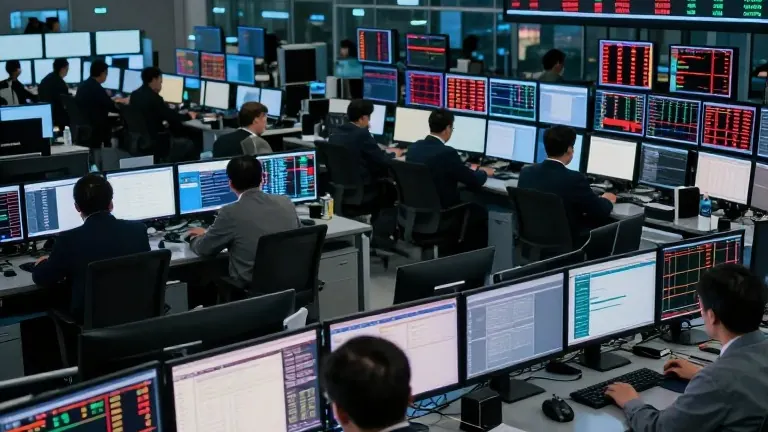
Chinese equity markets have erased $2.4 trillion in value since May, driven by a sharp correction in the artificial intelligence sector. The STAR 50 index, which tracks technology firms on the Shanghai exchange, has fallen 40% since June. Other major indices have declined by approximately 20% over the same period, according to data cited by Bloomberg.
The decline reflects a disconnect between state investment and private sector consumption. Goldman Sachs reports that AI stocks represent more than 40% of market value in China and Hong Kong. Consequently, valuation adjustments in this sector impact the entire domestic market. Beijing launched a 60 billion yuan state-backed AI fund this month to support domestic developers. However, consumer spending remains sluggish, leaving many tech firms struggling to achieve profitability.
Dan Wang, China director for the Eurasia Group, attributed the sell-off to thin profit margins, rising US interest rates, and weak domestic demand. She described a "general anxiety" among tech companies regarding the viability of state-supported models in a low-consumption environment. Wang stated, "This year, the profit margin is not as good as expected. And the US is raising rates. And China’s domestic demand is so weak."
US policy decisions have compounded domestic challenges. Washington has banned Chinese humanoid robots citing national security risks and is considering restrictions on Chinese components in data centers. These measures hurt Chinese exporters who rely on foreign markets to offset weak local sales. The robotics sector, viewed as a solution to demographic issues, is currently driven by government agencies and research institutions rather than households.
Shares in Unitree, a leading Chinese robot manufacturer, have halved since its trading debut in August. Wang noted that "embodied intelligence" has not yet translated into mass market profits. While optimism persists in AI research and satellite sectors due to military links, the broader AI boom is expected to continue globally for at least another year.
Policy responses are limited by upcoming political events. Top Communist Party officials are gathering this week for the fifth plenum to prepare for the 21st Party Congress next year. The Congress is expected to confirm Xi Jinping for a fourth term. Officials are avoiding risky stimulus measures during this sensitive period, with new overseas investment restrictions taking effect on December 1.
Meanwhile, US AI firm Anthropic filed paperwork for a potential initial public offering this week. The listing could raise up to $100 billion, potentially becoming the largest stock market debut in history. China has no comparable blockbuster IPOs scheduled, and analysts suggest that any major stimulus would be viewed as high risk before the next Party Congress.
More Business · Business Watchdog · Report a business · Got a Story?