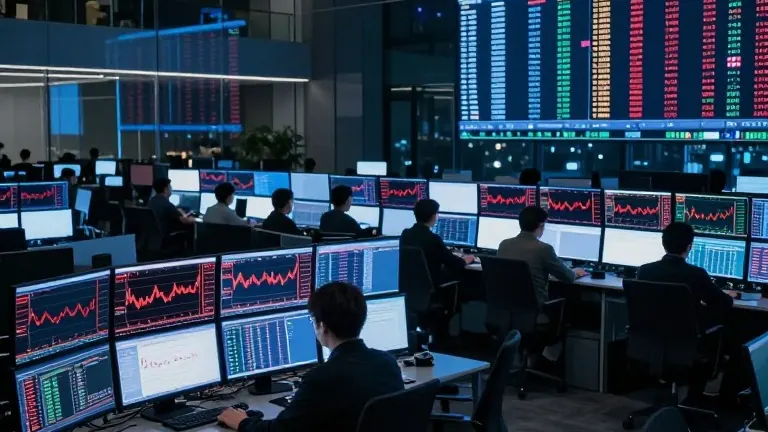
Breaking: Musk's $300B Loss and Mag 7's $1T Wipeout Mark Market Crash
Tesla and SpaceX lost $300 billion as the Magnificent Seven shed $1 trillion, driven by election results and AI fears.
By Andrew Kovalenko ·
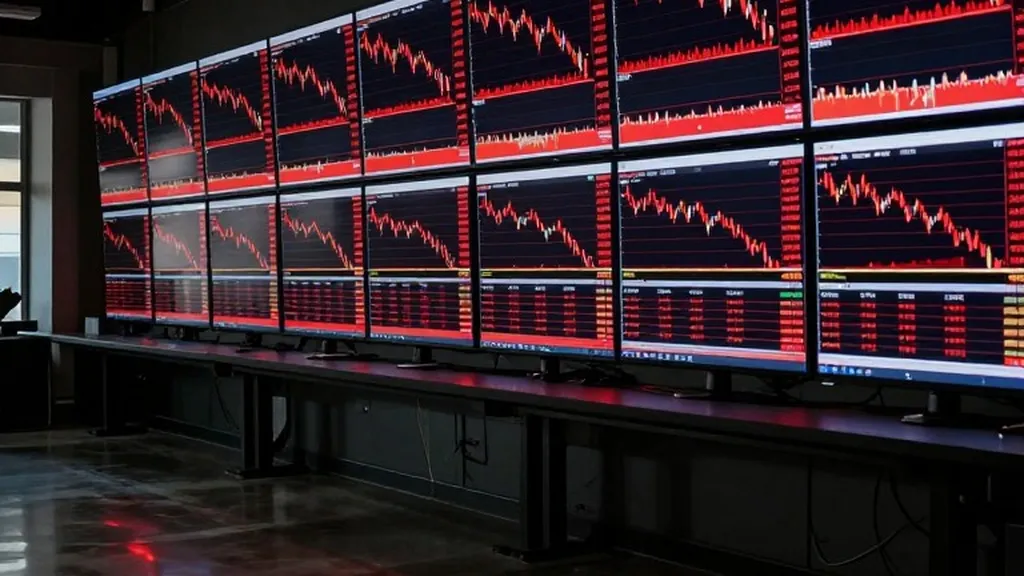
Elon Musk’s business empire suffered a historic blow on Thursday as Tesla and SpaceX combined to lose more than $300 billion in market value. The steep decline coincided with a broader rout in technology stocks, where the so-called Magnificent Seven group, which includes Apple and Nvidia, shed approximately $1 trillion in value in a single trading session. This massive erasure of wealth marked the worst day for the Nasdaq Composite in eighteen months, as investors reacted sharply to the outcome of Tuesday’s midterm elections and growing concerns over the valuation of artificial intelligence assets. The selling pressure was intense and widespread, reflecting a sudden shift in sentiment from optimism to caution among Wall Street participants.
The financial hit to Musk was compounded by his significant political expenditures during the election cycle. He spent nearly $450 million backing Republican campaigns across the country. A notable portion of this sum, at least $45 million, was directed toward supporting Ken Paxton for a Senate seat in Texas. That bet ultimately failed as the state went to the Democrats on Tuesday night. The loss in Texas was particularly significant for Musk because it is a state with a large concentration of planned data centers. The defeat highlighted the political risks associated with the rapid expansion of AI infrastructure in key regions.
The market crash was triggered by the Democrats' sweep of both the House and the Senate in the midterm elections. Democrats campaigned heavily on slowing the spread of data centers and AI development, winning numerous local ballots aimed at restricting such projects. In Texas, Democrat Gina Hinojosa won the governorship after campaigning on an immediate moratorium on new data center construction. Investors began to weigh the impact of these state-level restrictions on the pace of construction. This political shift raised fears that the AI build-out would face new hurdles, pressuring companies tied to the sector.
The decline in tech stocks was not limited to Musk’s companies. Nvidia fell 9.2 percent, losing more than $400 billion in market value, making it the biggest faller in the Dow Jones Industrial Average. The Philadelphia Semiconductor Index fell more than 12 percent, its worst day since the breakout in March 2020. Chip stocks led the rout, with SanDisk falling more than 22 percent and Western Digital down 17 percent. The sector has already fallen more than 30 percent since the beginning of October and is almost 40 percent below its peak in June. This sustained decline suggests deepening concerns about the profitability of AI investments.
Volatility spiked dramatically as traders sought to hedge against further losses. The Cboe Volatility Index, often called Wall Street’s fear gauge, jumped as much as 5.7 points to above 28 shortly after the opening bell. This was its highest reading since March 31, 2026. By midday, nearly 800,000 VIX call options had traded, which was 3.5 times the thirty-day average. The 10-year Treasury yield fell to 4.83 percent as investors moved into bonds as a safe haven. This flight to safety indicated a broad retreat from riskier assets across the market.
Analysts offered mixed views on the sustainability of the sell-off. Neil Wilson, an investor strategist at Saxo UK, described the event as a complete capitulation-level event in tech stocks. He noted that the fear of a momentum unwind was driving the market, though he suggested the move might be overdone. Dan Ives, a tech analyst, warned that Democratic control of the Senate would create major hurdles for AI and tech legislation over the next two years. He stated that the midterm results were a clear sign that the pace of data center build-out would start to slow, impacting revenue projections for major tech firms.
Ted Parkhill, founder and chief executive of Incline Investment Management, observed that the market was moving from the promise of AI to the price of AI. He acknowledged that while AI is transformative in the long run, not every AI-related stock is priced appropriately. He predicted a lot of turmoil ahead. Susannah Streeter, chief investment strategist at Wealth Club, said fresh panic over the AI trade had hit Wall Street hard. She noted that fears that vast sums poured into AI infrastructure may not deliver expected returns were colliding with the prospect of a sharp slowdown in data center construction.
Gene Goldman, chief investment officer at Cetera Financial Group, argued that the sell-off had become exaggerated as selling accelerated through the day. He predicted a recovery, noting that corrections in a bull market are typically short-lived. Frank Cappelleri, founder of CappThesis, pointed out that the Nasdaq was higher twelve months after the election in all but one of thirteen midterm cycles since 1974. However, he cautioned that the path can be a volatile one. Historical data showed that while the Nasdaq often recovers within six months after a correction, the journey can be rough, with the index gaining an average of 9.41 percent in the three months after a bottom.
The tech industry responded to the political and market shifts by emphasizing community engagement. Greg Brockman, president and co-founder of OpenAI, said at the WSJ Tech conference that everyone had been surprised by the reaction to data centers. He stated that the industry needs to be in communities rather than just tweeting about the benefits. Dina Powell McCormick, president of Meta, told the same conference that the industry needed to double and triple down on telling the story of AI. These comments highlighted a strategic pivot toward public relations and local stakeholder management in response to voter concerns.
More Business · Business Watchdog · Report a business · Got a Story?